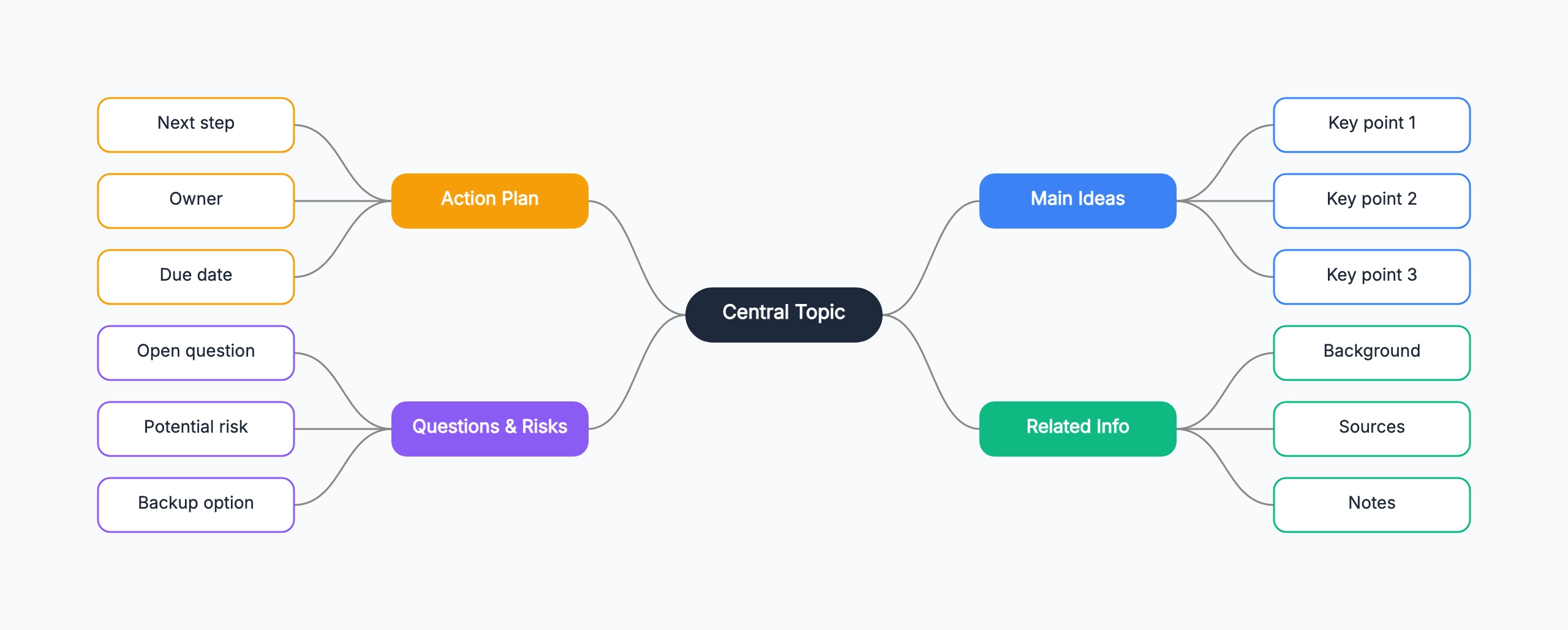
History midterm revision map
Who uses it: High school student preparing for a history exam
Industrial Revolution
|- Causes
|- Key inventions
|- Social impact
|- Likely essay questions
Why this works: The branches follow the way history questions are usually asked in class, so the student can revise facts and argument points in the same map.
Nursing lecture summary
Who uses it: University student reviewing weekly nursing lectures
Respiratory System
|- anatomy
|- symptoms
|- assessment steps
|- medication notes
Why this works: This layout keeps theory, symptoms, and practical actions separate, which makes it easier to review before labs and clinical discussions.
IELTS speaking topic map
Who uses it: Language learner building speaking notes
Travel Topic
|- places
|- personal story
|- useful adjectives
|- backup examples
Why this works: Instead of memorizing full scripts, the learner keeps short prompts, making the map easier to recall in a timed speaking test.
User interview synthesis
Who uses it: Product manager organizing research notes
Onboarding Research
|- first impression
|- pain points
|- feature requests
|- follow-up ideas
Why this works: A study-style mind map also works for qualitative research because it groups repeated patterns without losing the original interview themes.
Backend certification prep
Who uses it: Developer preparing for a cloud certification exam
AWS Exam Prep
|- IAM
|- networking
|- storage
|- mock test gaps
Why this works: The map separates service categories from weak spots, so the developer knows what to revisit after each practice test.
Course to script outline
Who uses it: Creator turning learning material into teaching content
Video Lesson Plan
|- core concept
|- demo example
|- audience questions
|- next lesson
Why this works: This version keeps the learning path and teaching path together, which helps the creator turn notes into a clear recording outline.