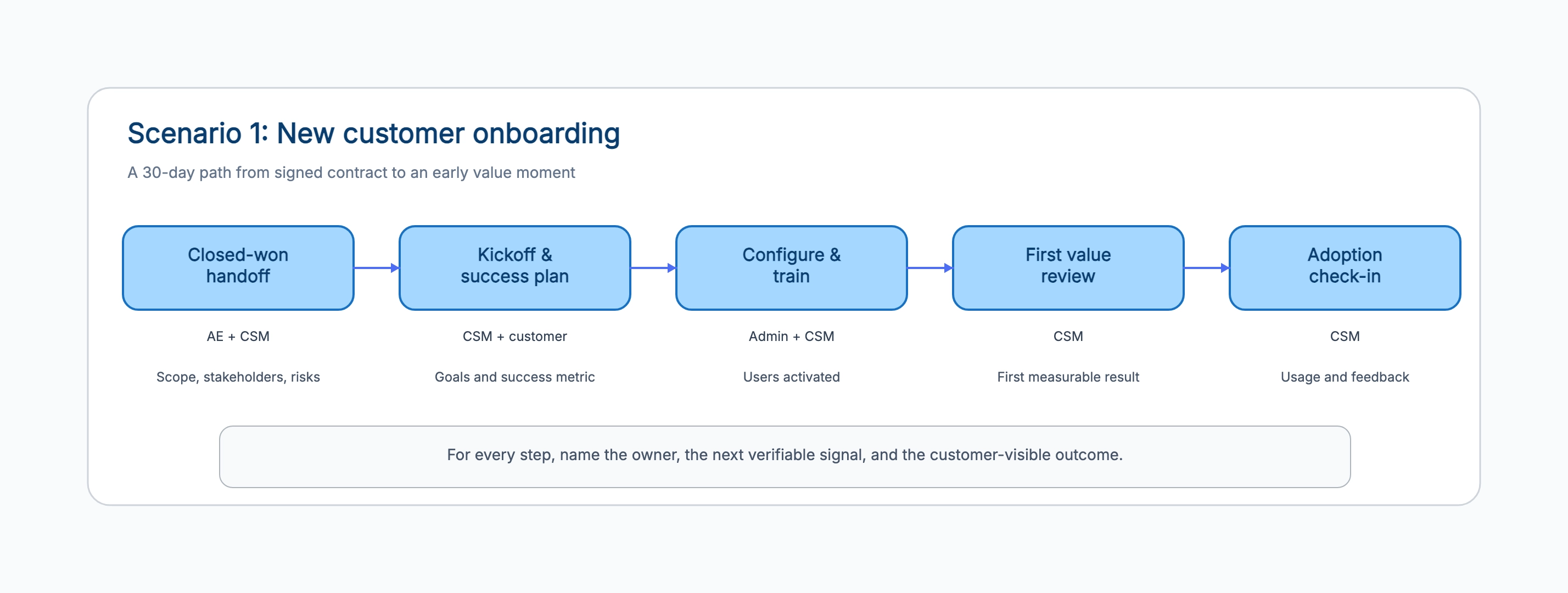
High-touch enterprise onboarding
Who uses it: A complex SaaS implementation with several stakeholders
Sales handoff includes scope, integration risk, sponsor, and procurement constraints
Kickoff produces a jointly signed success plan
Implementation is tracked against a named admin and technical milestone
The first value review uses a business metric agreed during discovery
Why this works: Enterprise accounts need more visible handoffs and evidence than a simple welcome sequence. The workflow keeps commercial, technical, and executive work on the same timeline.
Digital customer success
Who uses it: A scaled program serving many smaller accounts
Product events trigger onboarding messages and in-app guidance
CSM attention is reserved for accounts that miss an activation signal
Usage cohorts replace one-to-one meeting milestones
The renewal path starts from product value evidence and support history
Why this works: Scaled teams automate coordination but retain human time for accounts with a meaningful signal, not simply every new logo.
At-risk recovery
Who uses it: A team responding to falling usage or a poor sponsor relationship
A score change opens a diagnosis task rather than an automatic rescue email
The CSM documents the root cause with the customer
A recovery plan has one owner, a deadline, and a next proof point
Leadership is engaged only when the recovery needs an executive decision
Why this works: A recovery motion is successful when it creates shared evidence that the account is healthier, or reaches a timely, well-understood decision to escalate.