College seminar
Who uses it: University instructor
Seminar outcomes
Weekly readings
Discussion and final project
Why this works: A small course can make preparation and participation expectations explicit without overloading the calendar.
These syllabus examples show how the same semester-level structure changes with audience, duration, assessment style, and institutional context.
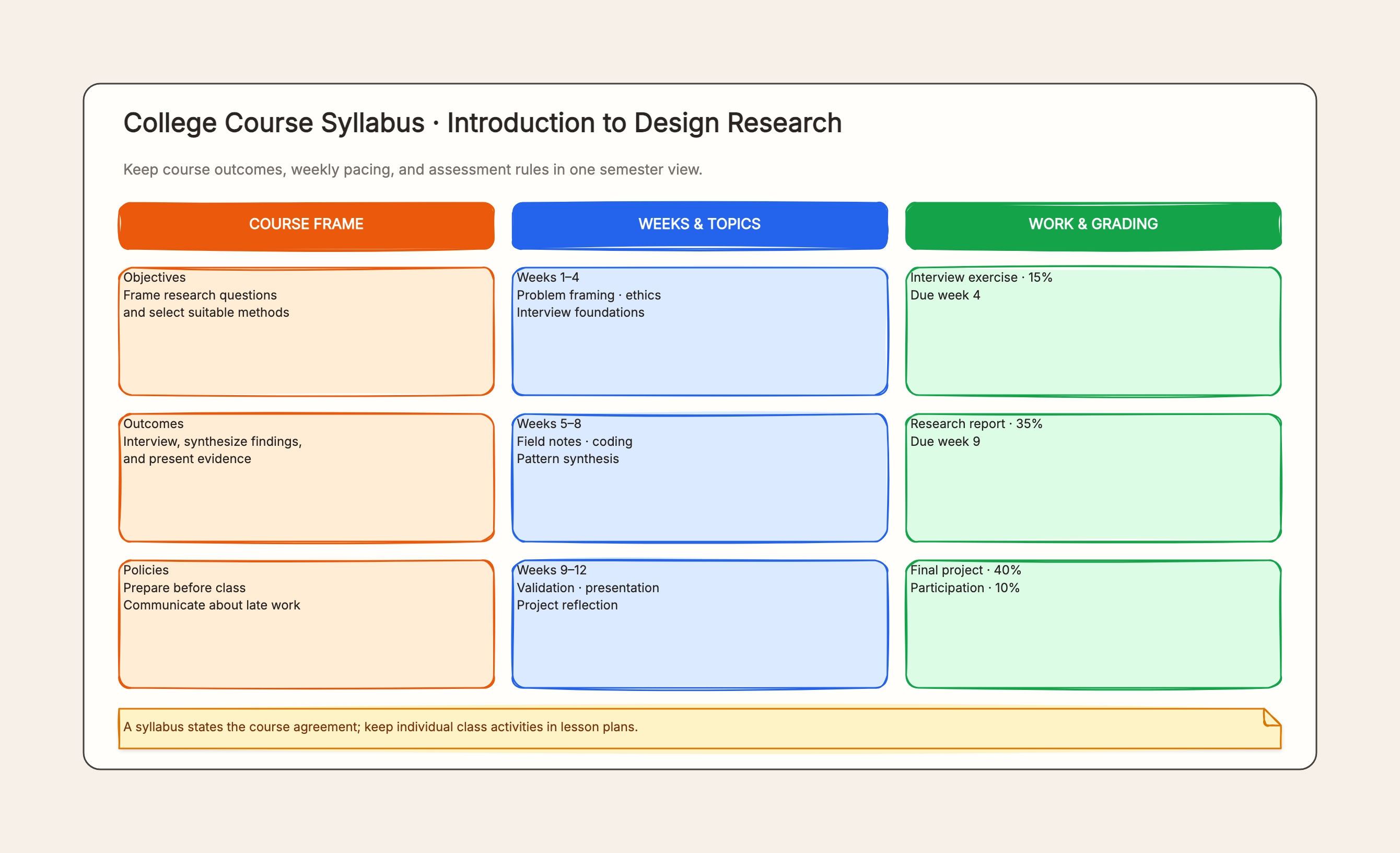
Who uses it: University instructor
Why this works: A small course can make preparation and participation expectations explicit without overloading the calendar.
Who uses it: Secondary teacher
Why this works: Unit blocks make the relationship among labs, evidence, and assessment visible.
Who uses it: Elective teacher
Why this works: A lighter structure helps students and families understand recurring routines.
Who uses it: Training lead
Why this works: Observable criteria keep completion connected to job tasks.
Who uses it: Online instructor
Why this works: The board distinguishes participation modes and avoids ambiguous deadlines.
Who uses it: Studio instructor
Why this works: Milestones reveal dependencies between research, making, feedback, and revision.
A syllabus covers one course and its agreement with learners; a curriculum map coordinates learning across courses, grades, or a full program.
A syllabus describes the semester; a lesson plan details objectives, activities, and checks for one class meeting.
The schedule shows sequence and dates, while the assessment plan explains evidence, criteria, and weighting.
Connect every major outcome to at least one assignment or observable performance.
View all major deadlines together and redistribute avoidable clusters.
Verify current department, school, accessibility, and academic-integrity language before publishing.
Include purpose, outcomes, topic sequence, required work, grading, key dates, policies, support routes, and instructor contact expectations.
Yes. You can edit the board in the browser and export the result without signing up.
Yes. The examples include both, but you should adapt policy language and requirements to your institution.
Go back to the template, swap in your own content, and keep the same structure if it fits your project.
Use this template: /editor/new?template=course-syllabus
Create a course syllabus