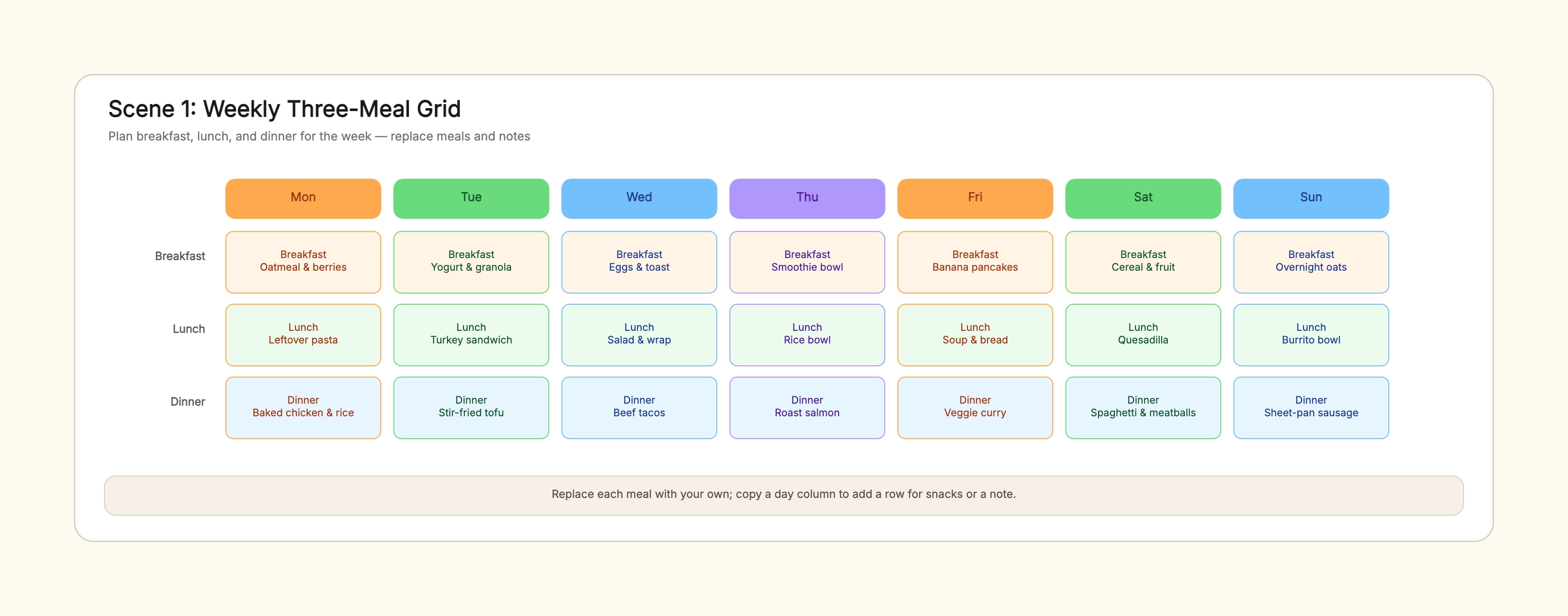
Family week with grocery list
Who uses it: A household planning dinners and one weekly shop
Mon — Chicken & rice | Tue — Tacos
Wed — Pasta night | Thu — Salmon & greens
Fri — Pizza from scratch
Grocery: produce, protein, dairy, pantry
Note: leftovers become next day's lunches
Why this works: Planning five dinners and deriving the grocery list from them covers most families. The leftover note connects the plan to lunches without planning each one.
Batch-prep week
Who uses it: A household cooking once for the week
Sunday: chop veggies, cook grains, batch proteins
Portion into 5 boxes, label with meal + date
Mon–Fri: grab-and-go from the boxes
Why this works: A batch-prep week concentrates the work into one session. The prep board makes the session explicit: chop, cook, portion, label, each with an owner.
Busy work week
Who uses it: Two working adults with limited evening time
Mon/Wed — quick stir-fries (20 min)
Tue/Thu — slow-cooker meals set in the morning
Fri — takeout or leftovers
Lunches: repeatable wraps and rice bowls
Why this works: A busy week plans around time: quick meals on heavy days, slow-cooker on mid days, and repeatable lunches so the plan survives the week.
Meal prep for one
Who uses it: A single person prepping lunches for the work week
Sun: cook one grain + one protein + roasted veg
Portion 5 lunch boxes
Dinners: quick meals from the same base
Why this works: Prepping for one uses the same structure at a smaller scale — one grain, one protein, one vegetable, portioned once. The board still keeps prep tasks visible.
Budget-friendly week
Who uses it: A household planning around staples and sales
Base meals on rice, pasta, beans, seasonal veg
Plan 2 'use the pantry' nights
One meatless night
Why this works: A budget plan starts from staples and sales instead of recipes. The pantry nights and meatless night are explicit rows so the plan respects the budget.
Family with dietary preferences
Who uses it: A household with a vegetarian member
Mon — veggie curry (shared)
Tue — tacos: meat + bean options
Wed — pasta with two sauces
Grocery note: separate protein rows
Why this works: Mixed preferences are handled by planning shared bases with separate toppings or proteins, and the grocery list marks the extra rows clearly.