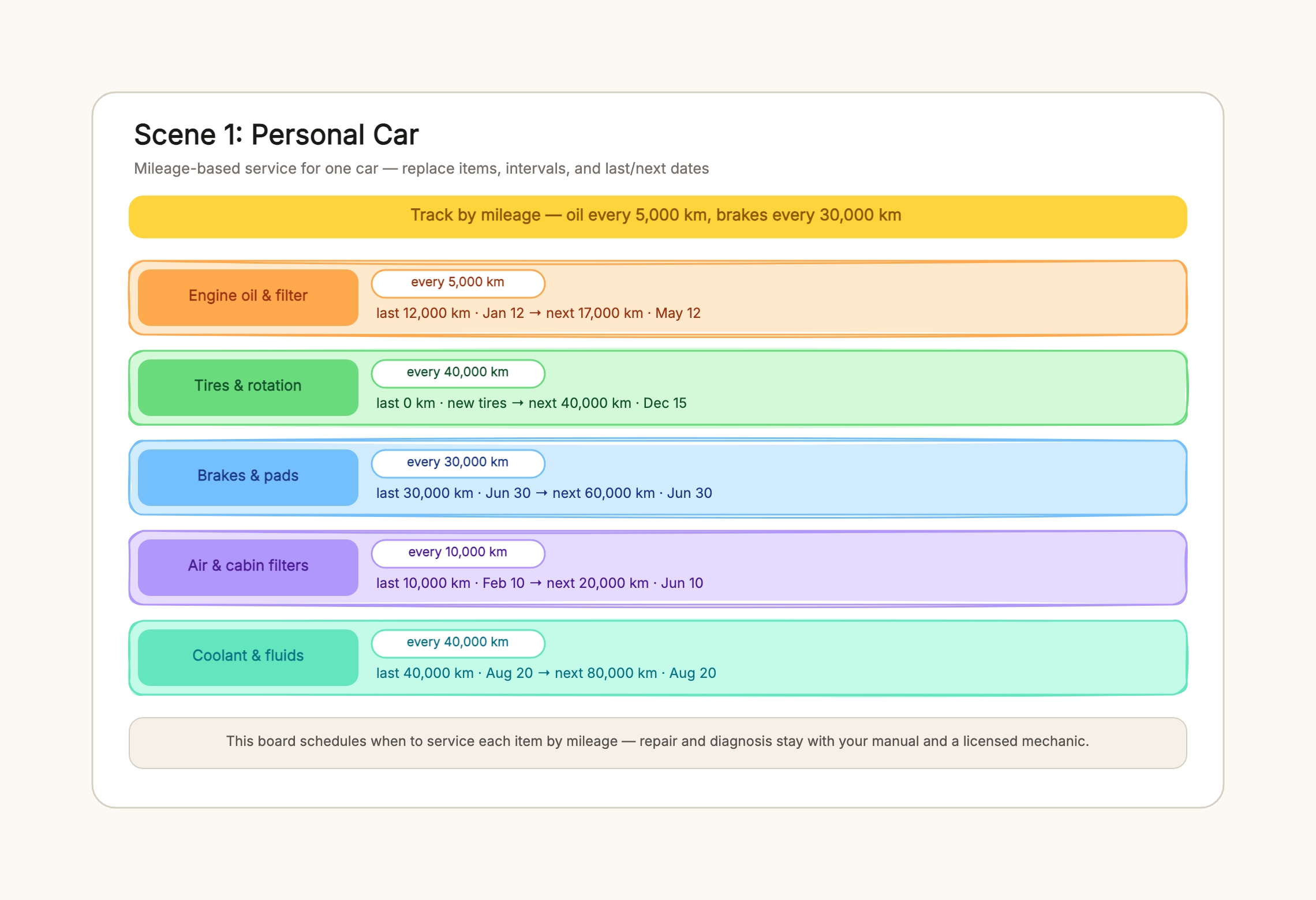
Daily commuter car
Who uses it: A commuter driving a gasoline sedan to work every day
Engine oil & filter — owner's manual due point
Tires & rotation — inspection and manual policy
Brakes & pads — inspection result and manual
Air & cabin filters — operating-condition adjustment
Coolant & fluids — specified fluid and manual due point
Why this works: A commuter racks up kilometres fast, so mileage drives the schedule. Oil and filters are the frequent items; brakes and coolant catch the longer intervals.
Delivery van fleet
Who uses it: A fleet manager tracking a set of delivery vans
One board per van, with the current odometer reading
Oil — OEM schedule plus duty cycle
Tires — inspection and fleet rotation policy
Brakes — OEM inspection schedule
Filters — OEM schedule plus operating environment
Why this works: A fleet runs synthetic oil and longer intervals, but the real work is logging each van's mileage and flagging what is due next across the whole fleet.
Commercial box truck
Who uses it: An owner-operator running a heavy-duty box truck
Oil & filter — OEM mileage or engine hours
Tires — axle/tire policy plus inspection
Brakes — OEM and regulated inspection
Air filter — OEM plus dust/load severity
Coolant — OEM fluid and test schedule
Why this works: Heavy-duty PM uses longer intervals and follows the OEM schedule. The board keeps the mileage and dates visible so a missed interval does not turn into downtime.
Weekend car
Who uses it: Someone with a low-mileage second car
Oil — the manual's time/mileage rule, whichever applies first
Coolant & brake fluid — the specified inspection/service rule
Tires — check age, not just tread
Battery — test before winter
Why this works: A car that sits still ages by time. The schedule adds time-based fallbacks to the mileage intervals so fluids and the battery are not forgotten.
Ride-share vehicle
Who uses it: A driver putting 2,000+ km a month on a car
Oil — manual interval adjusted for actual duty; log every change
Tires — rotate and inspect under the applicable policy
Brakes — inspect under the manual and symptom triggers
Cabin filter — adjust the manual interval for operating conditions
Why this works: High monthly mileage compresses every interval. The schedule is checked against the odometer weekly so nothing slips past a busy month.
Workshop service board
Who uses it: A small shop scheduling customer vehicles
One row per customer vehicle, with mileage and due date
Oil, tires, brakes, filters, coolant columns
Flag overdue items in red before the customer arrives
Roll the next-due dates after each service
Why this works: A shop uses the same board as a work queue: each vehicle is a row, and the due items tell the technician what to check first without a phone call.