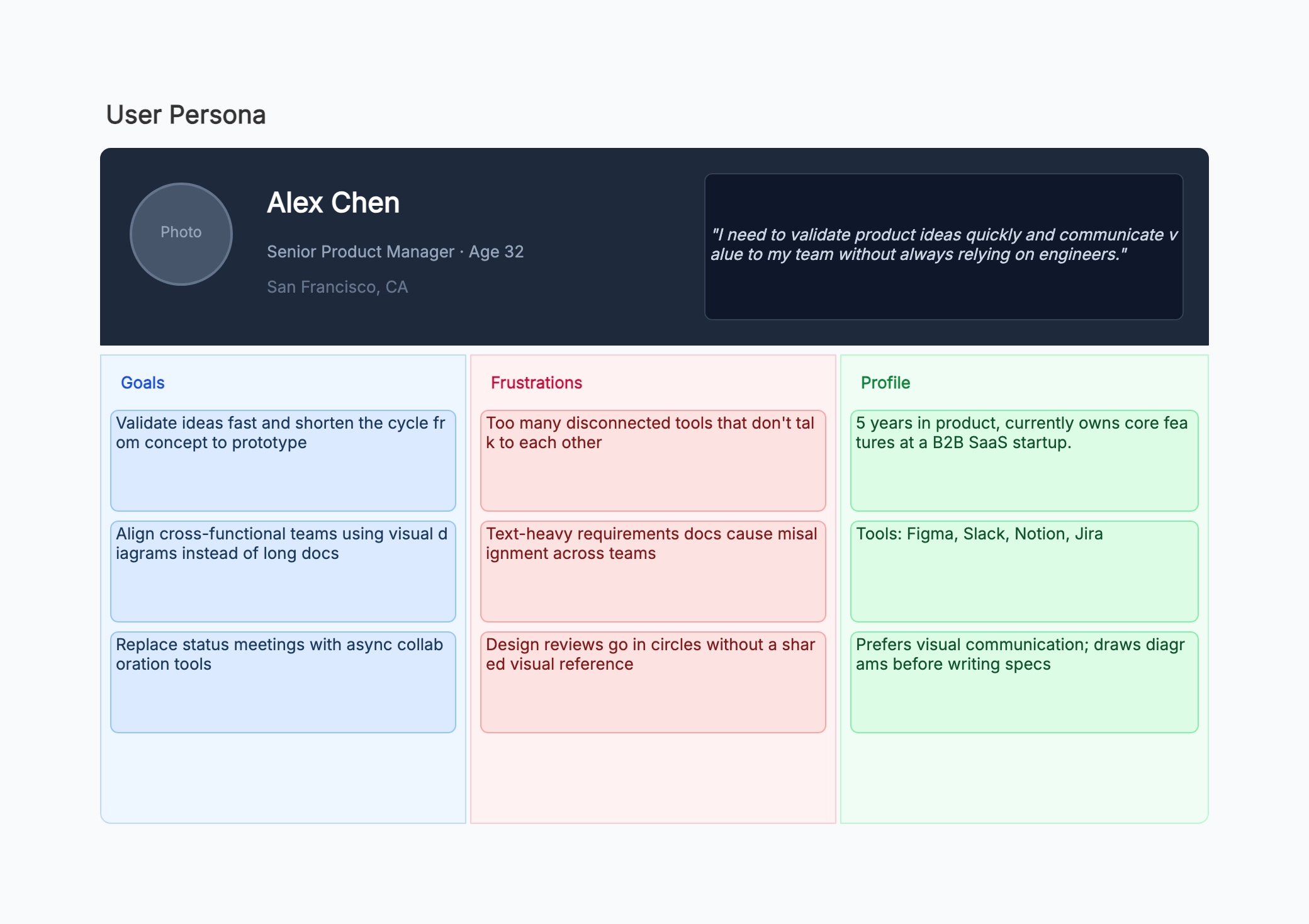
B2B SaaS power user
Who uses it: Product team at a project management software company
Alex Chen · Senior PM · 32 · San Francisco
Goals: faster prototyping, visual team alignment, async-first workflows
Frustrations: tool fragmentation, long spec docs, design review loops
Profile: 5 yrs exp, Figma/Slack/Notion user, prefers diagrams over text
Why this works: This persona anchors feature decisions for a core paid-tier user. The frustrations map directly to the product's value prop — every new feature should address at least one of them.
First-time mobile app user
Who uses it: UX team designing an onboarding flow for a fintech app
Maria Santos · Freelance Designer · 27 · São Paulo
Goals: understand where money goes, save without thinking, build emergency fund
Frustrations: confusing banking interfaces, fear of making mistakes, too many notifications
Profile: tech-comfortable but finance-anxious, checks phone 40+ times/day
Why this works: The anxiety signal in the frustrations section informed a gentler onboarding — fewer confirmation dialogs, plain-language copy, and a single action per screen.
University student researcher
Who uses it: EdTech team building a research tool for students
Jordan Kim · PhD Student · 26 · Chicago
Goals: organize sources efficiently, cite correctly, write faster first drafts
Frustrations: citation formats keep changing, notes scattered across apps
Profile: reads 10+ papers/week, heavy Zotero user, writes in sprints
Why this works: Understanding the citation frustration led to a one-click export feature that became the most-shared feature in user reviews.
E-commerce repeat buyer
Who uses it: Growth team optimizing retention for an online fashion brand
Priya Mehta · Marketing Manager · 34 · London
Goals: find quality basics fast, avoid returns, discover brands that match values
Frustrations: inconsistent sizing, misleading product photos, generic recommendations
Profile: shops 2x/month, trusts reviews over brand copy, sustainability-conscious
Why this works: The sizing frustration drove investment in detailed size guides and user-uploaded photos. Addressing it reduced the return rate by 18% in the following quarter.
Enterprise IT buyer
Who uses it: Sales and product team at a security software vendor
David Park · IT Director · 48 · Seoul
Goals: reduce security incidents, pass compliance audits, train team without downtime
Frustrations: vendor lock-in, poor support response, tools that need constant patching
Profile: manages 200-person org, conservative buyer, needs board-level reporting
Why this works: The compliance and reporting goals shaped the product roadmap: audit-ready dashboards became a top-priority feature after this persona was validated with five interviews.
Content creator monetizing an audience
Who uses it: Platform team building creator monetization tools
Sam Rivera · YouTuber / Educator · 29 · Austin
Goals: turn audience into stable income, reduce admin work, focus on content
Frustrations: platform algorithm changes, payment delays, managing multiple income streams
Profile: 80k subscribers, posts 2x/week, uses Gumroad and Patreon, burned by platforms before
Why this works: The platform distrust and income stability needs pointed to a feature: guaranteed payout schedules with clear revenue breakdowns — matching the persona's core anxiety about financial unpredictability.