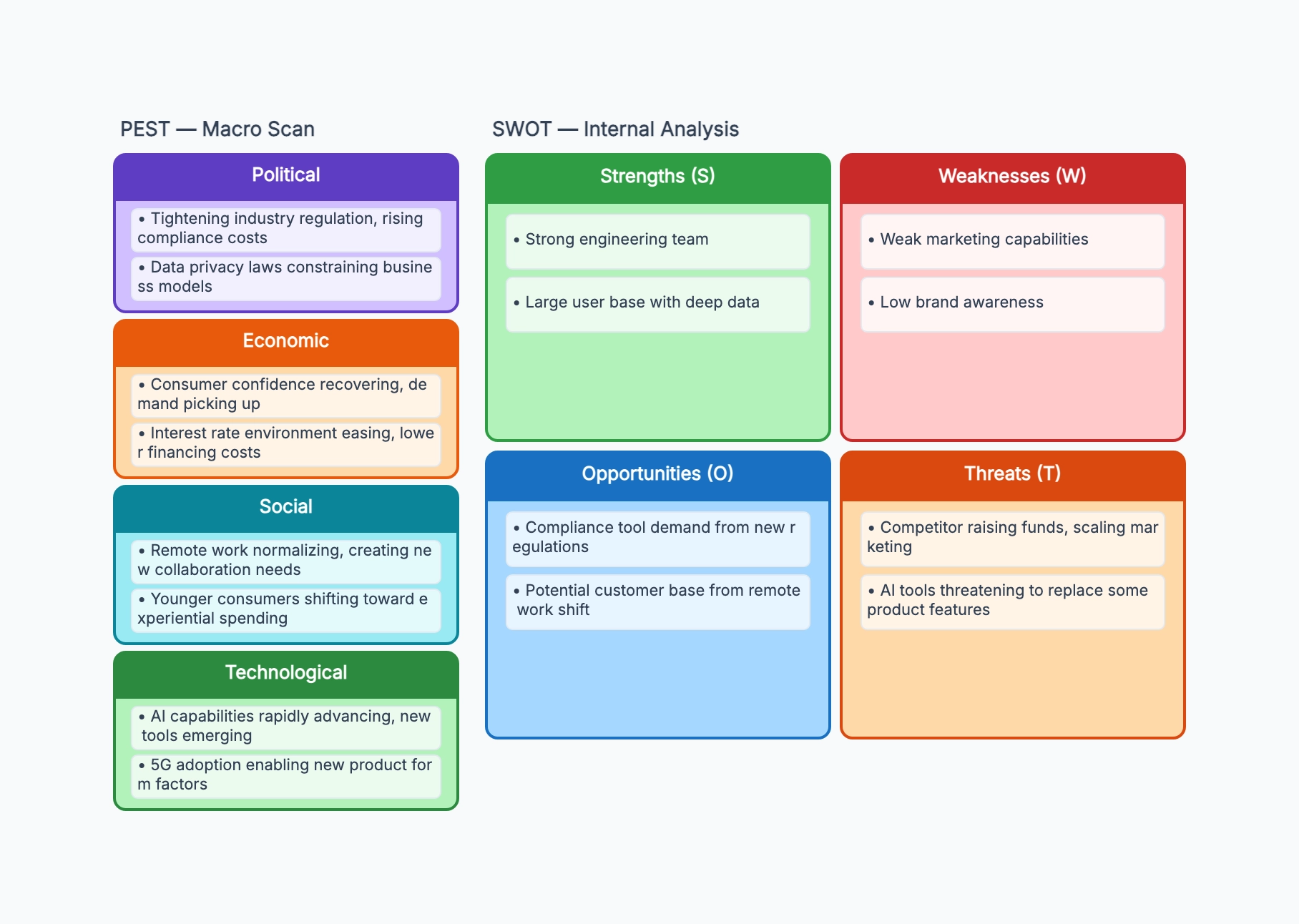
Market entry
Who uses it: Strategy team evaluating a new region
PEST: regulatory approval path, currency volatility, mobile-first behavior, payment infrastructure
SWOT: strong product fit, weak local support, partner opportunity, compliance threat
Why this works: The PEST scan keeps the team honest about the market; SWOT asks whether the company is positioned to win there.
Product launch
Who uses it: Product marketer preparing launch strategy
PEST: procurement budget cycle, buyer concern around security, AI adoption trend, platform policy shifts
SWOT: security proof, thin analyst coverage, demand window, platform dependency
Why this works: External timing matters only after the team maps whether internal strengths can capture it.
Nonprofit planning
Who uses it: Nonprofit leadership team planning annual priorities
PEST: grant rules, inflation, community needs, digital service access
SWOT: volunteer base, funding gap, partnership opportunity, donor fatigue
Why this works: The combined view helps separate funding environment changes from organizational capacity.
Education program expansion
Who uses it: Program manager deciding whether to expand online courses
PEST: policy support, household budget pressure, hybrid learning acceptance, platform improvements
SWOT: strong instructors, weak production process, online demand, cheaper competitors
Why this works: PEST identifies the trend; SWOT tests whether the program can actually deliver against it.
Retail channel strategy
Who uses it: Retail operator evaluating ecommerce investment
PEST: local tax changes, consumer spending shift, social shopping behavior, logistics tools
SWOT: loyal customer base, weak fulfillment, online growth, marketplace fees
Why this works: The handoff from PEST to SWOT turns broad market talk into operational trade-offs.