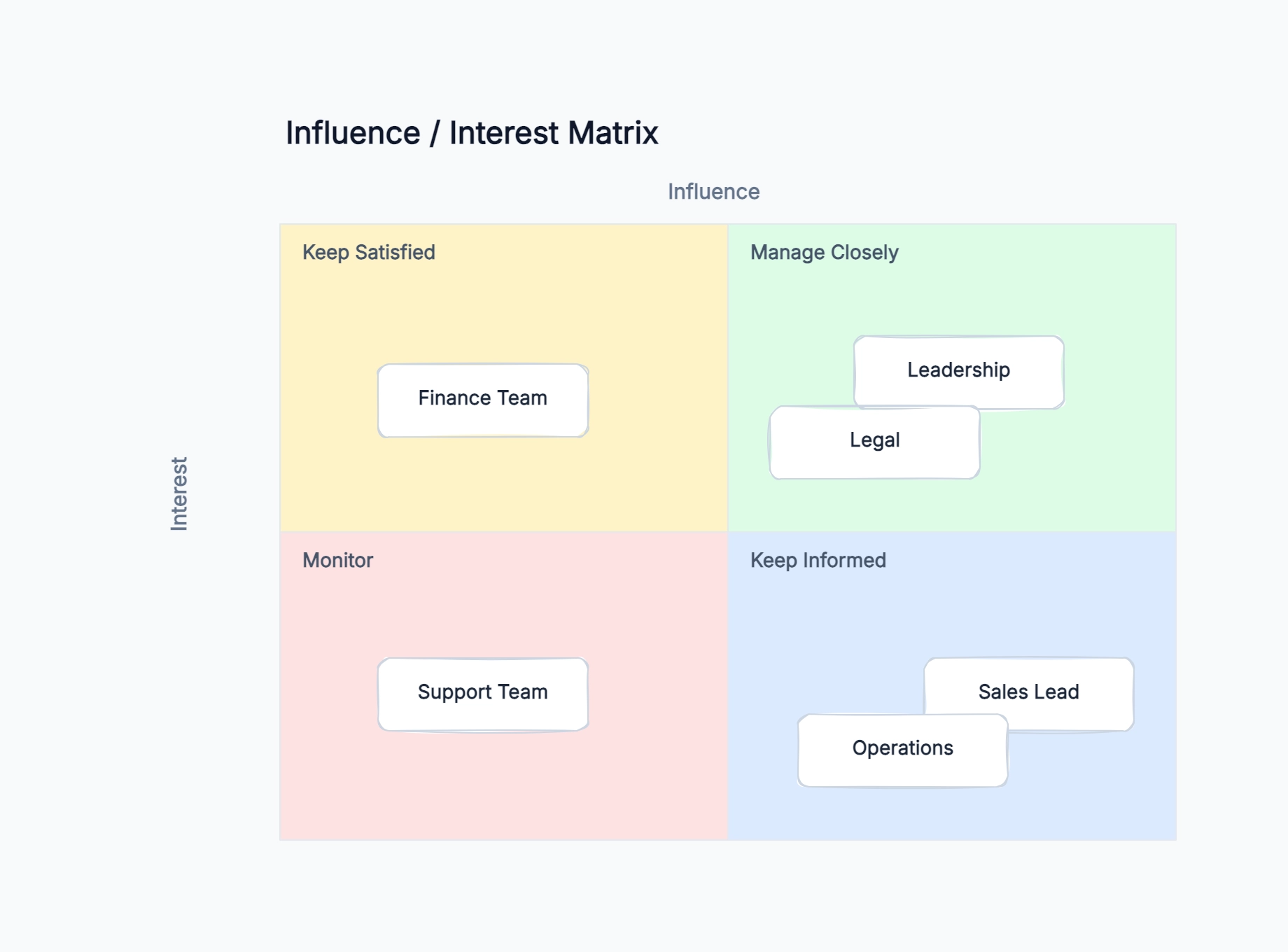
Software product launch
Who uses it: Product manager preparing to launch a new feature to existing customers
High power / High interest: CPO, Engineering Director — approve scope and timeline
High power / Low interest: CFO — approves budget; needs quarterly summary only
Low power / High interest: Customer Success, QA — daily users of the new feature
Low power / Low interest: HR, Office Admin — minimal project impact
Strategy: Weekly syncs with CPO and Engineering Director; monthly update to CFO; training sessions for CS and QA
Why this works: The CFO has veto power over budget but low day-to-day interest — sending weekly updates wastes their time and buries the important asks. A monthly one-page summary keeps them satisfied without creating noise.
Organizational restructuring
Who uses it: HR director or COO managing a company reorganization
High power / High interest: CEO, Board — driving the restructuring decision
High power / Low interest: Major shareholders — need outcome update, not process detail
Low power / High interest: Affected team members — highest emotional stake
Low power / Low interest: External vendors — notified of contact changes only
Strategy: CEO and Board in every major decision; employees briefed before announcement goes public
Why this works: In a restructuring, the most dangerous communication failure is employees learning about changes from outside sources before their managers tell them. Mapping the low-power / high-interest quadrant first tells you who needs early, careful, direct communication.
Enterprise software implementation
Who uses it: Implementation consultant deploying a new ERP or CRM system
High power / High interest: IT Director, Project Sponsor — own the project
High power / Low interest: CIO — needs milestone updates and risk escalation only
Low power / High interest: End users, Department Leads — daily system users
Low power / Low interest: Procurement, Finance Admin — affected by outputs only
Strategy: Steering committee with IT Director and sponsor; user training and change management for end users
Why this works: Enterprise implementations fail most often because end users are treated as low priority until go-live. The map highlights that end users are high interest even if low power — their resistance can kill adoption even when the system works technically.
Marketing campaign approval
Who uses it: Marketing manager running a cross-functional campaign
High power / High interest: CMO, Brand Director — final creative approval
High power / Low interest: Legal, Compliance — must review claims, not involved in creative
Low power / High interest: Creative Team, Content Writers — producing all assets
Low power / Low interest: Sales Team — receive campaign brief, not involved in creation
Strategy: CMO in weekly creative review; legal review at defined checkpoints, not ongoing; daily standups with creative team
Why this works: Legal sits in high power / low interest — they must approve but do not want to attend every creative review. Setting defined legal checkpoints (rather than ad-hoc reviews) keeps them satisfied without slowing the creative process.
Infrastructure migration project
Who uses it: DevOps lead planning a cloud migration affecting multiple teams
High power / High interest: CTO, Engineering Leads — own the technical decision
High power / Low interest: CFO — approves migration budget
Low power / High interest: Application teams — their services are being migrated
Low power / Low interest: Customer Support — needs to know about planned downtime windows
Strategy: CTO and leads in architecture decisions; application teams in testing and cutover planning; support team briefed on maintenance windows
Why this works: Application teams are often treated as passive recipients in infrastructure migrations — but they are high interest because their services break if the migration goes wrong. Early involvement prevents last-minute blockers when cutover begins.
Strategic partnership negotiation
Who uses it: Business development director managing a major partnership deal
High power / High interest: CEO, BD Director — own the deal
High power / Low interest: Legal, Finance — contract and financial review
Low power / High interest: Product Team — integration work falls to them
Low power / Low interest: Marketing — will announce partnership post-signing
Strategy: CEO aligned on deal terms; legal and finance engaged at term sheet and contract stage; product team consulted on integration feasibility before signing
Why this works: Consulting the product team before signing (not after) prevents the most painful partnership failure mode: a signed deal that requires integration work the product team says will take 12 months, not 3.