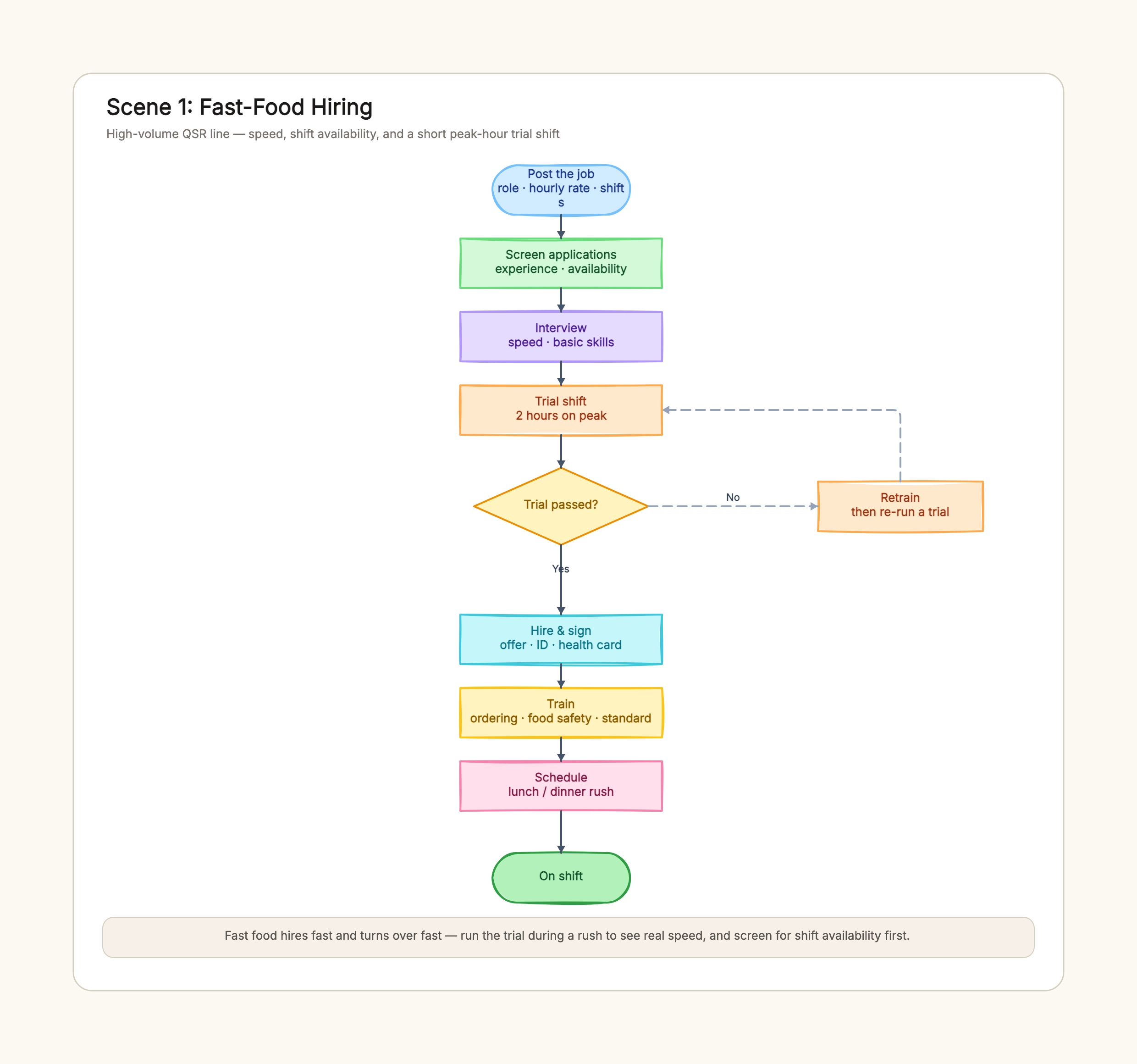
Fast-food crew hire
Who uses it: A quick-service manager staffing a busy counter
Post — crew, hourly rate, shifts
Screen — experience, availability
Interview — speed, basic skills
Paid skills check — mock tickets, same rubric
Hire → train → schedule lunch / dinner
Why this works: The flow screens availability early, then uses a controlled simulation or paid lawful assessment with the same scoring rubric for every candidate.
Full-service server hire
Who uses it: A dining-room manager hiring servers
Post — server, pay, shifts
Screen — experience, skills, start date
Interview — service sense, role skills
Role scenarios — service, allergy communication, safe setup
Offer, then complete locally required checks
Why this works: Use job-related scenarios and consistent scoring. Complete only the credentials required for the role and location, at the lawful stage.
Kitchen cook hire
Who uses it: A head chef hiring a line or prep cook
Post — cook, pay, shifts
Screen — kitchen experience, stations
Interview — knife skills, food safety
Controlled simulation — station sequence and safety scenario
Train menu and kitchen rules before scheduling
Why this works: Back-of-house hiring can use supervised simulations for sequencing and safety evidence. Menu and site-specific procedures belong in post-hire training.
Coffee shop barista hire
Who uses it: A café owner hiring a barista
Post — barista, hourly, shifts
Screen — coffee experience, availability
Interview — latte art, brewing, service
Simulation — drink steps + closing checklist
Train recipes, standards, equipment care
Why this works: A small café can simulate drink sequencing and closing steps, then train proprietary recipes and equipment after hire.
Seasonal summer rush hire
Who uses it: A manager hiring extra staff for a tourist season
Post — seasonal role, shifts
Screen — availability for the whole season
Group interview — speed and attitude
Structured simulation — same tasks and scoring
Batch schedule around peak weeks
Why this works: Seasonal hiring is about availability across the whole rush and fast batching. The flow collapses screening and interviewing and schedules around the peak weeks.
Rehire a past employee
Who uses it: A manager bringing back a former team member
Check — past performance, why they left
Skip the long interview, confirm skills
Refresh skills evidence with the same rubric
Verify only applicable credentials are current
Schedule and slot into the roster
Why this works: A rehire may use a shorter review, but should still receive consistent, job-related evaluation and any lawful role-specific checks.