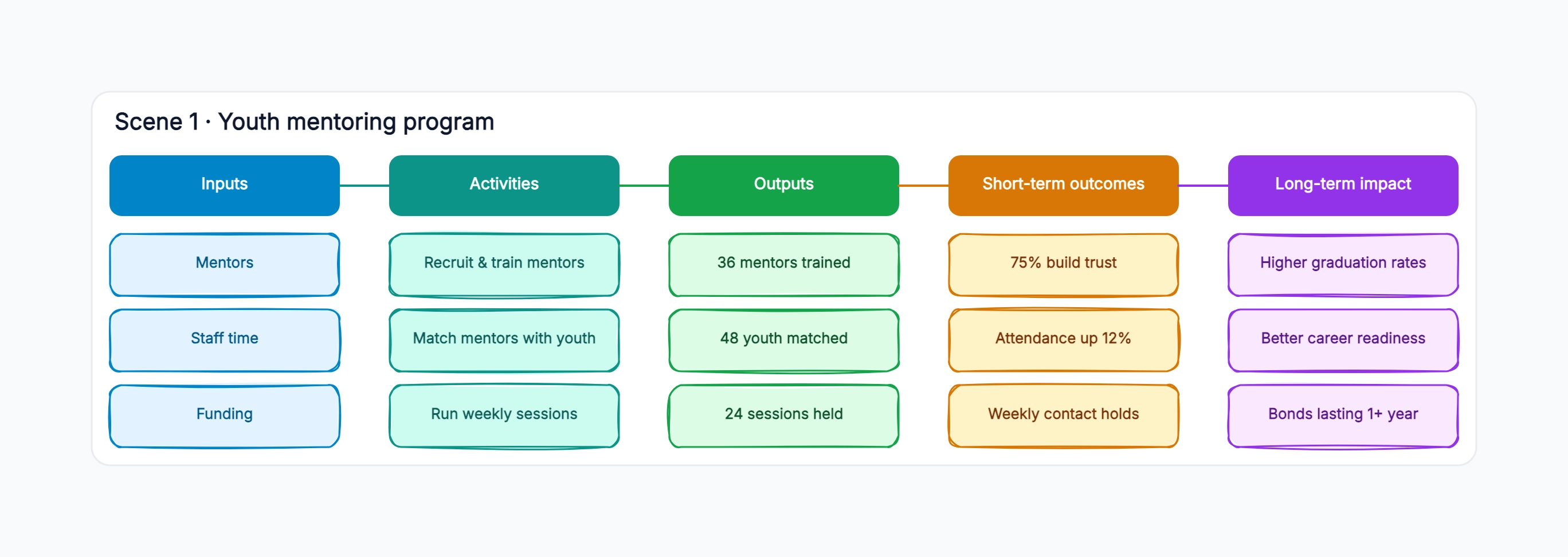
Youth mentoring program
Who uses it: A mentoring nonprofit planning a new cohort
Why this works: Mentoring programs hinge on the relationship, so the short-term outcomes focus on trust and attendance before the long-term goal of graduation.
These examples show how the same five-column logic model adapts to three different missions. Each keeps the causal chain intact while changing what counts as an input, activity, output, and outcome.

Who uses it: A mentoring nonprofit planning a new cohort
Why this works: Mentoring programs hinge on the relationship, so the short-term outcomes focus on trust and attendance before the long-term goal of graduation.
Who uses it: A food assistance program reporting to funders
Why this works: Food pantries emphasize the volume of outputs (households served) but must connect that to the outcome of reduced hunger, not just food moved.
Who uses it: A job-readiness program measuring long-term impact
Why this works: Workforce programs lead with employment outcomes, so the long-term impact column focuses on stable jobs and earnings rather than intermediate measures.
Go back to the template, swap in your own topics, and keep the same structure if it fits your class or project.
Use this template: /editor/new?template=nonprofit-logic-model
Use the nonprofit logic model template