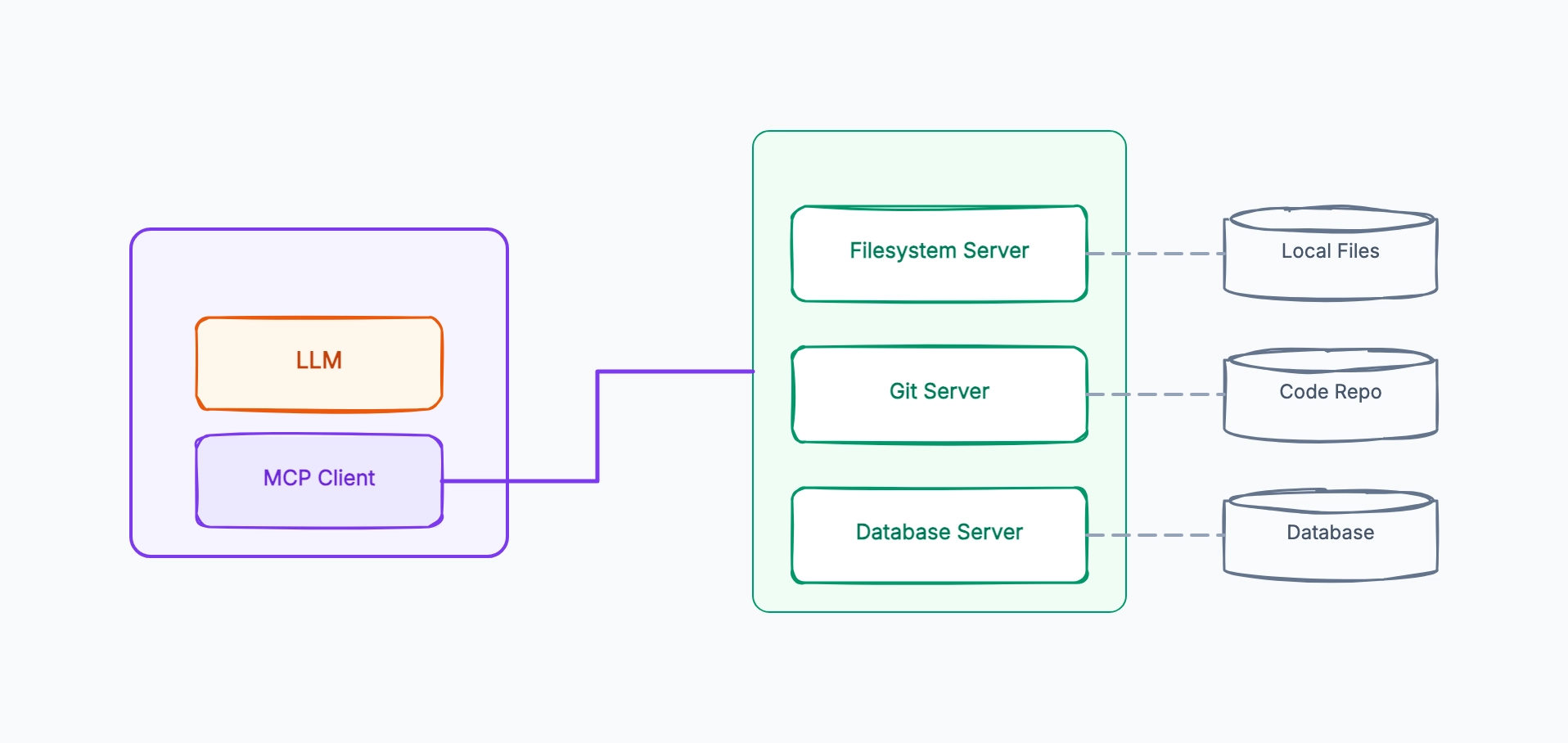
Single-server setup (the simplest MCP)
Who uses it: Developer adding their first MCP server to an app
Host: a desktop AI app with one MCP client
One server: filesystem access over stdio
Resource: a local project folder
Protocol: JSON-RPC, server runs as a child process
No auth needed — local, single-user
Why this works: The single-server case is the cleanest way to understand MCP — one client, one server, one resource — before adding the complexity of multiple servers or remote transport.
Multi-server host
Who uses it: Team building an assistant that touches many systems
Host runs multiple MCP clients, one per server
Servers: filesystem, Git, database, web search
The LLM picks which server's tools to call per request
Each server is independently versioned and deployable
Adding a capability = adding a server, not changing the host
Why this works: The multi-server pattern is where MCP earns its keep — instead of building N custom integrations into your app, you add servers that all speak the same protocol, so capabilities compose.
Custom MCP server
Who uses it: Engineer exposing an internal API to AI hosts
Custom server wraps an internal REST API
Exposes a small set of MCP tools (search, create, update)
Translates MCP tool calls into authenticated API requests
Any MCP-compatible host can now use it with no host changes
Resource behind it: the internal service + its database
Why this works: A custom server is how you make a proprietary system MCP-native — you write the server once, and every MCP host (different IDEs, chat apps, agents) gains access without each one writing a bespoke integration.
Remote MCP server
Who uses it: Team deploying a shared server for many users
Server runs as a remote service over HTTP + SSE
Multiple hosts connect to the same server instance
OAuth handles per-user authentication and scopes
Server is centrally maintained and monitored
Resource: a shared SaaS backend
Why this works: Remote MCP moves servers from a local child process to a hosted service — the diagram changes by adding an auth layer and showing many hosts connecting to one server, which is the model for shared, multi-tenant capabilities.