Back to template

Marketing SWOT Analysis Examples

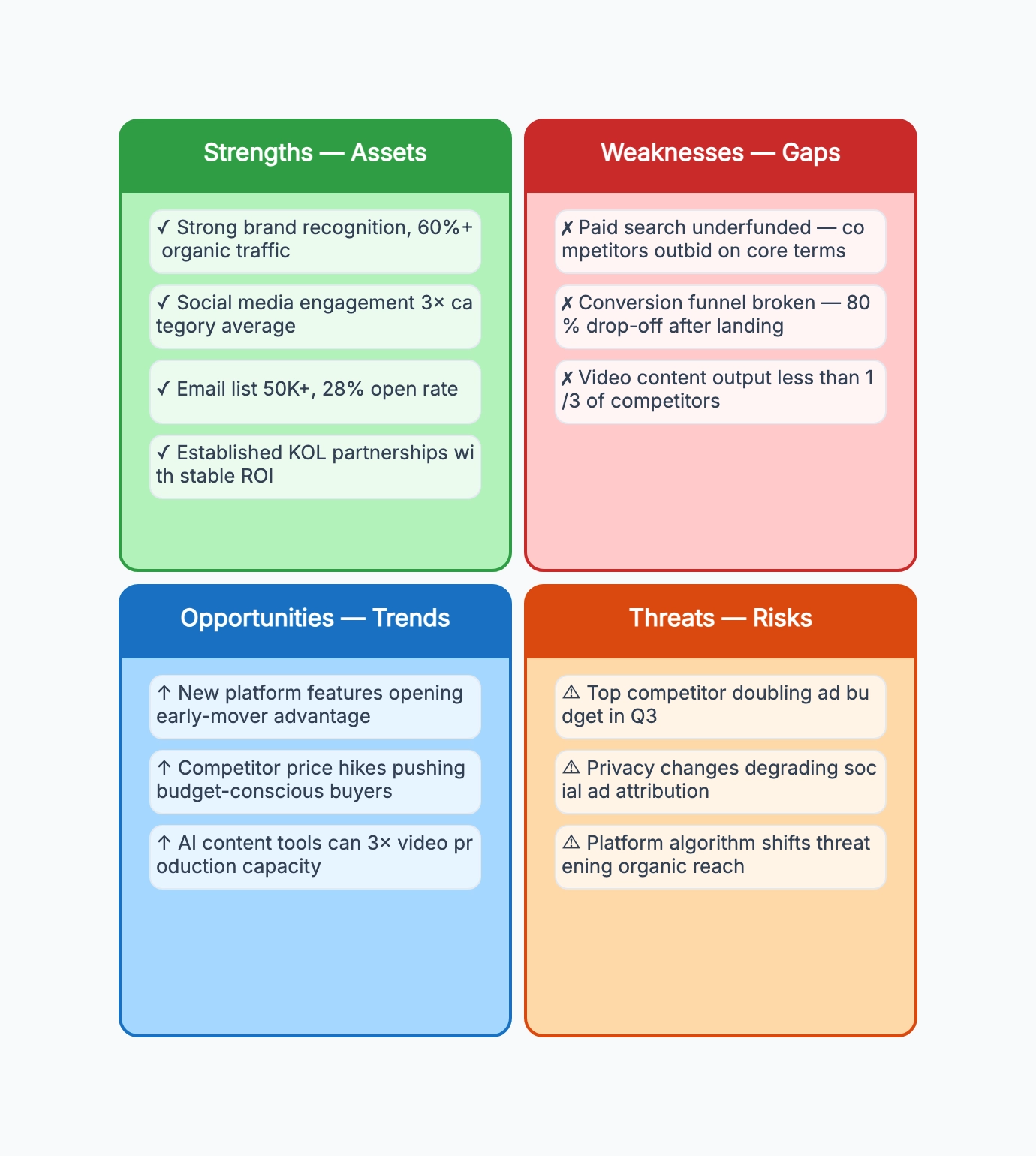
These marketing SWOT examples show how the same four-quadrant framework changes depending on the channel, campaign, and audience. Use the closest example as a starting point, then replace the notes with evidence from your own funnel.

Marketing SWOT Analysis Examples

Real examples

Product launch campaign

Who uses it: Marketing lead preparing a launch brief

Strengths: beta testimonials, founder audience, clear problem statement
Weaknesses: no analyst coverage, landing page untested, limited video assets
Opportunities: competitor price increase, seasonal planning cycle, partner newsletter slot
Threats: crowded launch month, paid CPC spike, sales enablement not ready

Why this works: This version helps the team decide whether to delay launch, shift budget, or invest in sales collateral before the announcement.

SEO growth program

Who uses it: Content marketer planning the next quarter

Strengths: strong technical docs, existing domain authority, product-led examples
Weaknesses: weak internal linking, no comparison pages, slow publishing cadence
Opportunities: competitor pages outdated, new keyword cluster opening, user questions repeating
Threats: SERP dominated by templates, AI summaries reducing clicks, backlink gap

Why this works: The SWOT points directly to content architecture work instead of another disconnected list of article ideas.

Paid acquisition review

Who uses it: Growth marketer reviewing ad budget

Strengths: clear trial conversion path, high-intent retargeting list
Weaknesses: creative fatigue, weak landing page speed, narrow audience tests
Opportunities: new competitor category, cheaper long-tail queries, partner co-marketing
Threats: CPC inflation, platform policy changes, attribution loss

Why this works: A paid-channel SWOT separates fixable internal issues from market conditions the team must work around.

Brand repositioning

Who uses it: Brand team preparing messaging changes

Strengths: loyal customer base, recognizable visual style, category expertise
Weaknesses: unclear promise, inconsistent copy, limited proof points
Opportunities: buyer pain shifting, outdated competitor messaging, new use case emerging
Threats: loyal users confused by change, competitors copying claims, PR risk

Why this works: This helps brand teams test whether a repositioning is grounded in market pull or just internal preference.

Content calendar planning

Who uses it: Small team deciding what to publish

Strengths: customer stories, founder expertise, existing newsletter audience
Weaknesses: no design support, limited keyword research, inconsistent updates
Opportunities: comparison keywords, tutorial demand, partner interviews
Threats: larger blogs publishing faster, outdated screenshots, search intent changes

Why this works: The matrix turns a content calendar from a list of topics into a set of defensible bets.

Tips for better study mind maps

  • Tie each item to evidence: analytics, sales notes, customer calls, or search data.
  • Limit each quadrant to five high-signal points so the final plan stays readable.
  • End the session with decisions: what to double down on, fix, test, and monitor.

Start editing online

Go back to the template, swap in your own topics, and keep the same structure if it fits your class or project.

Use this template: /editor/new?template=marketing-swot

Open the marketing SWOT template