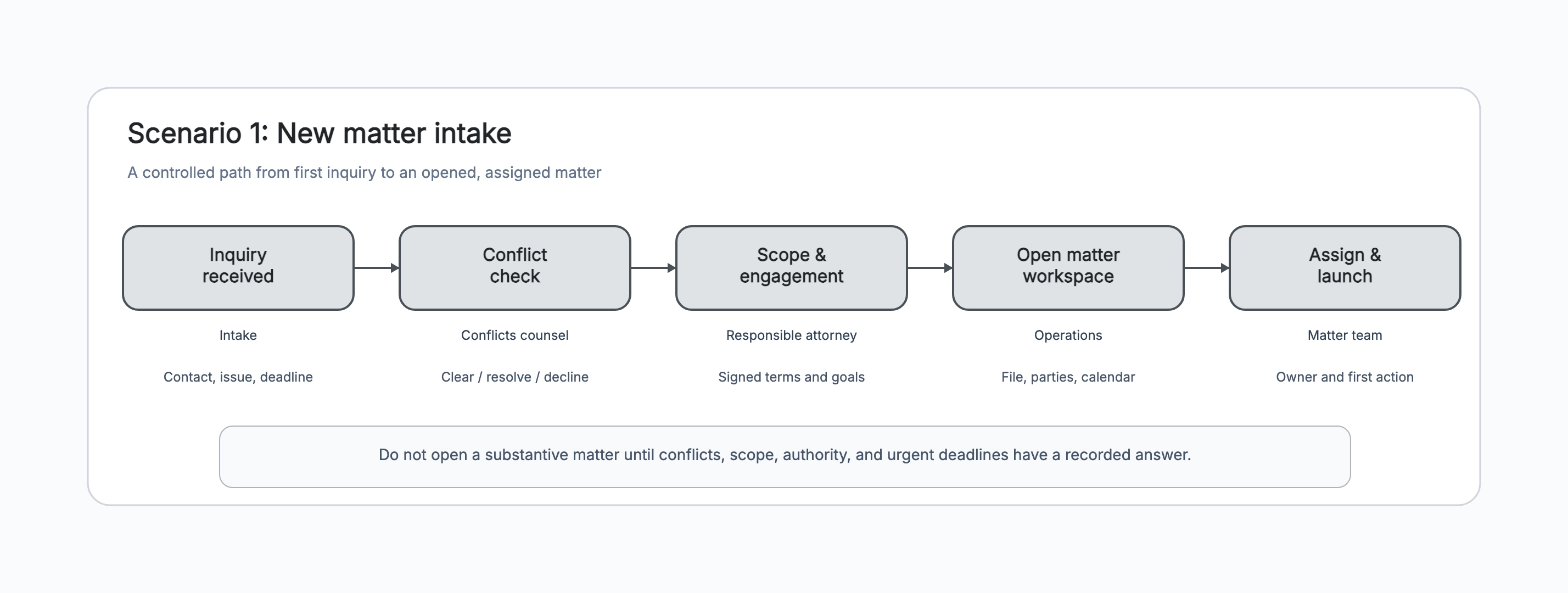
New client and matter intake
Who uses it: A firm standardizing first inquiry to attorney assignment
Capture issue and deadline
Complete the approved conflict route
Confirm engagement, scope, and authority
Open workspace and calendar
Assign the matter owner
Why this works: The point is not speed alone: it is making sure the matter begins with the right authority, records, and urgency handling.
Litigation coordination
Who uses it: A matter team managing a sequence of filings, discovery, and client decisions
Preserve and assess
Set pleading and calendar plan
Track discovery requests and evidence
Document strategy and authority
Record outcome and next deadline
Why this works: The workflow makes decisions and evidence visible alongside the substantive work.
Matter closeout
Who uses it: A team reducing missing documents and unfinished financial tasks after resolution
Confirm resolution
Send client closeout
Review final billing and trust balance
Apply retention and access rules
Archive a searchable record and lessons
Why this works: Closeout becomes a controlled handoff rather than an afterthought once the matter is resolved.