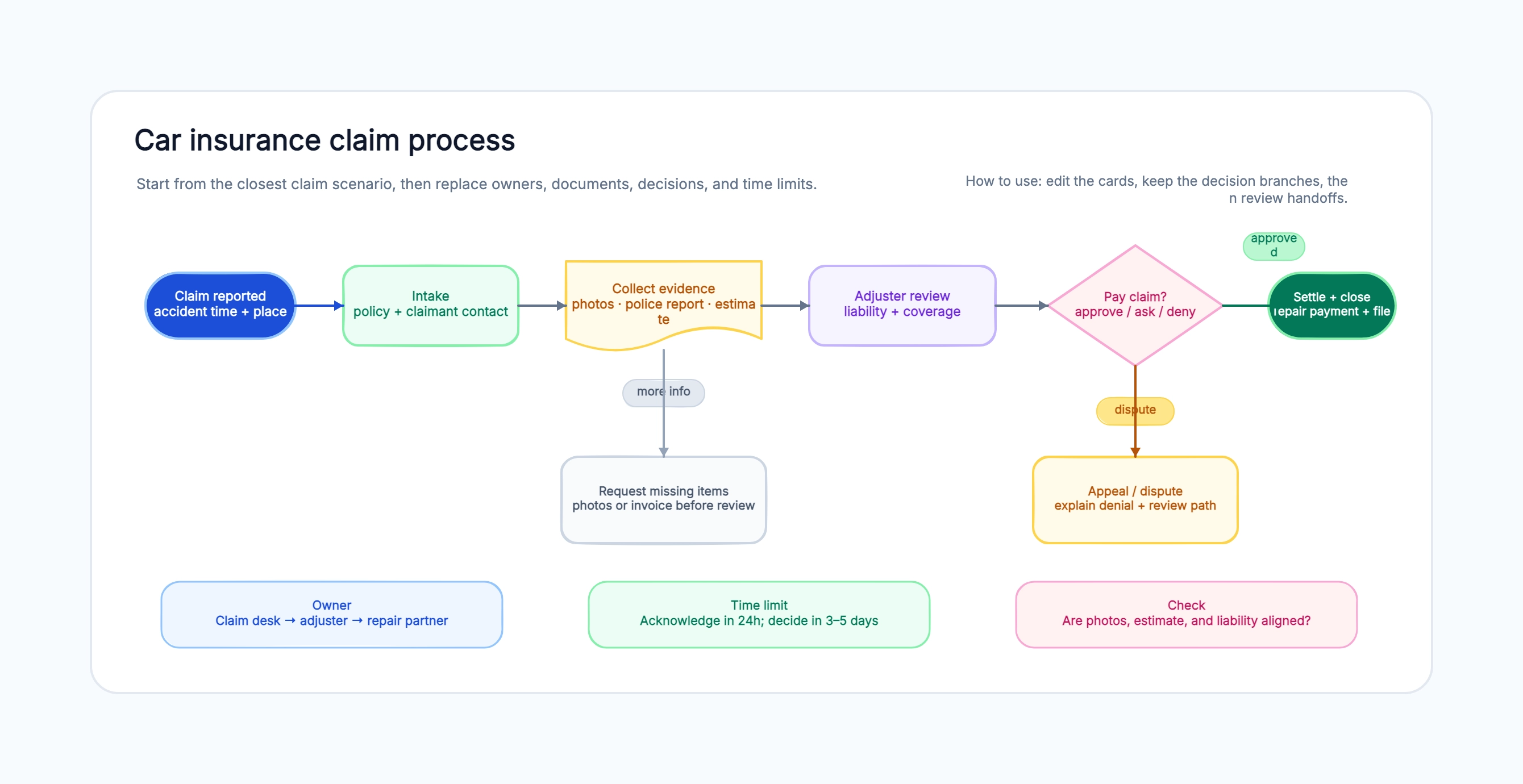
Car insurance claim
Who uses it: A claims team explaining auto claim handling
Accident reported
Policy details captured
Photos and repair estimate collected
Adjuster reviews coverage and liability
Payment or dispute path
Why this works: Auto claims often need repair estimates, liability review, and rental or body-shop coordination. The flowchart keeps those handoffs visible.
Health insurance claim
Who uses it: A billing or member-support team
Provider bill submitted
Coding and eligibility reviewed
Medical necessity checked
Claim approved, denied, or pended
Appeal path for missing information
Why this works: Health claims usually depend on coding, eligibility, and medical-necessity checks, so the decision node must clearly show pending and appeal routes.
Property damage claim
Who uses it: A property insurer, adjuster, or training class
Loss reported
Site inspection scheduled
Damage inventory collected
Coverage review
Settlement or dispute
Why this works: Property claims benefit from separating site inspection from document review, because each has different owners and timelines.