Buyer walkthrough
Who uses it: Prospective buyer
Exterior
Systems
Rooms
Questions
Why this works: Keeps visible facts separate from later professional conclusions.
Each example changes the questions and ownership while preserving the line between personal observation and professional evaluation.
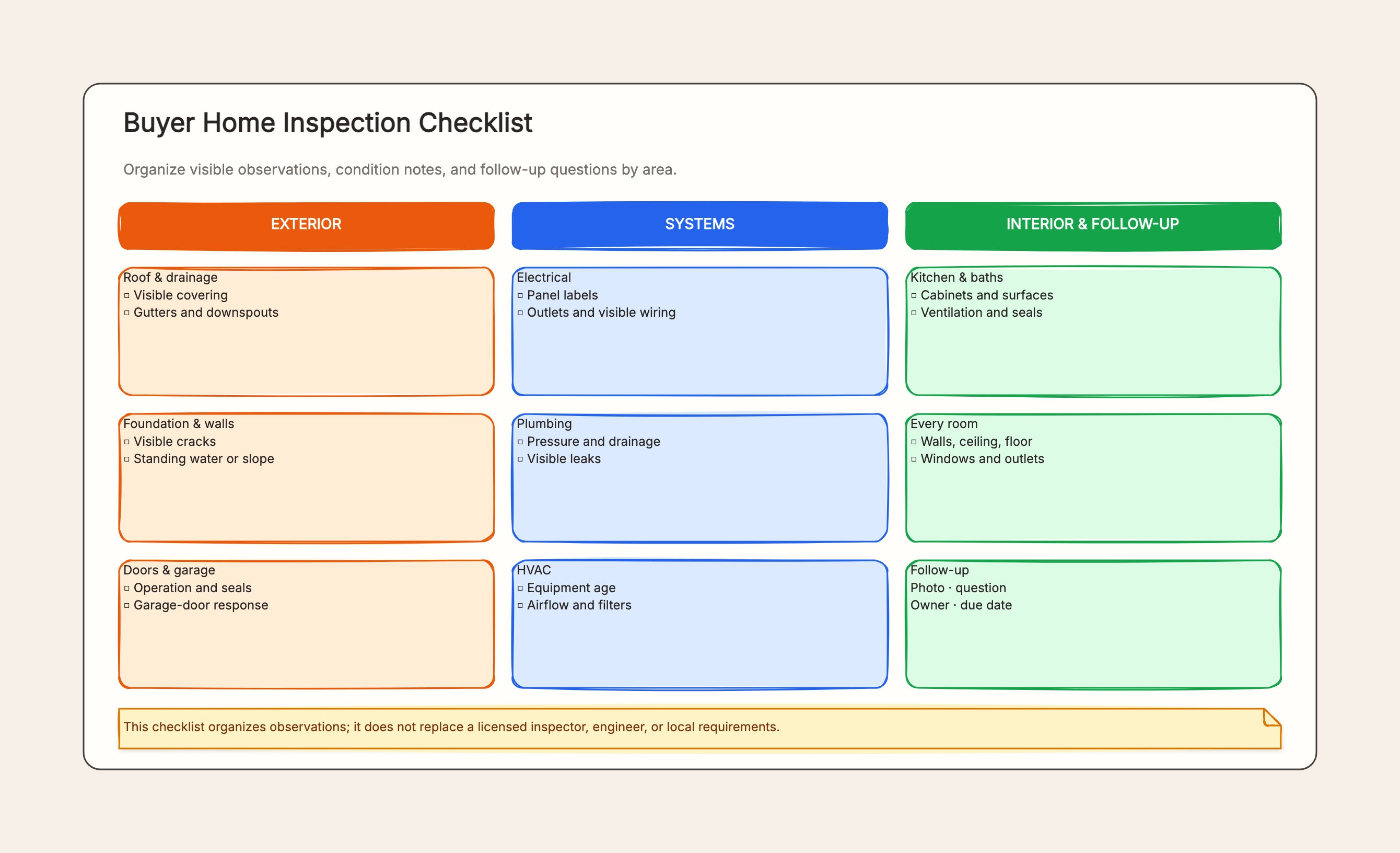
Who uses it: Prospective buyer
Why this works: Keeps visible facts separate from later professional conclusions.
Who uses it: Home seller
Why this works: Creates a calm record before marketing begins.
Who uses it: Manufactured-home buyer
Why this works: Adds property-type prompts without claiming universal standards.
Who uses it: Condo buyer
Why this works: Separates unit observations from association responsibilities.
Who uses it: Buyer before closing
Why this works: Focuses on documented changes rather than repeating a full inspection.
Who uses it: Homeowner
Why this works: Turns observations into a maintenance conversation.
A checklist captures observations and prompts; a professional report evaluates conditions within a defined scope.
Buyers prepare questions and decisions, while sellers organize records, visible maintenance, and disclosure follow-ups.
A stain is an observation; declaring its hidden cause requires appropriate expertise and evidence.
A completed list does not certify a property's condition or code compliance.
Use neutral facts, photo references, and questions for the relevant professional.
VA, FHA, USDA, mobile-home, disclosure, and permit requirements must be verified with current official or local sources.
No. It is an organization tool for observations and questions.
Yes, the pre-listing example organizes records and repair questions without replacing disclosure duties.
It can organize questions, but current program requirements must be checked with official sources and qualified professionals.
Go back to the template, swap in your own content, and keep the same structure if it fits your project.
Use this template: /editor/new?template=home-inspection-checklist
Open the inspection checklist