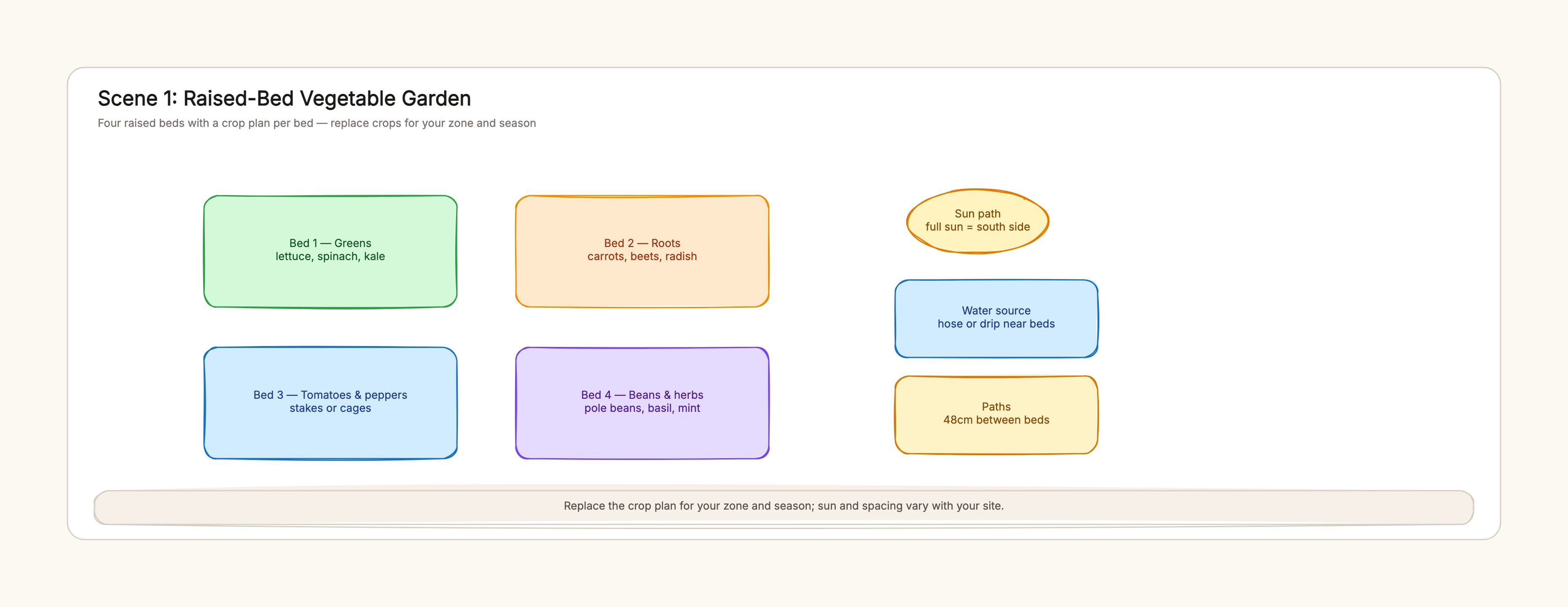
Raised-bed vegetable garden
Who uses it: A gardener with space for four raised beds
Bed 1 — Greens: lettuce, spinach, kale
Bed 2 — Roots: carrots, beets, radish
Bed 3 — Tomatoes & peppers, staked
Bed 4 — Beans & herbs, trellised
Why this works: Four beds with one crop family each keep the rotation simple and the harvest varied across the season.
Small backyard garden
Who uses it: A gardener with a compact yard
Raised bed — salad greens, herbs
Container corner — peppers, cherry tomatoes
Border — pollinator flowers
Trellis — cucumbers, beans up
Why this works: A small yard uses containers and vertical space, with a bed for the daily greens and a border that brings in pollinators.
Seasonal planting plan
Who uses it: A gardener planning the whole year
Spring — plant cool crops, start warm crops indoors
Summer — plant warm crops, harvest & water
Fall — plant fall crops, harvest & preserve
Winter — rest, soil care, order seeds
Why this works: A seasonal plan spreads the work across the year and keeps the garden producing instead of all-at-once.
Crop rotation across beds
Who uses it: A gardener avoiding soil fatigue
Year 1 — greens → roots → tomatoes → beans
Year 2 — rotate each family to the next bed
Keep a rotation note on the plan
Why this works: Rotating crop families across beds keeps the soil balanced and reduces pests, with the rotation written on the plan so it is not forgotten.
Container-only garden
Who uses it: A gardener with a balcony or patio
Herb pots — basil, mint, parsley
Tomato and pepper containers — sunny corner
Salad greens in a shallow planter
Watering plan for container pots
Why this works: A container garden needs a watering plan because pots dry out faster — the layout puts sun-loving plants where the sun is.
First-year garden
Who uses it: A new gardener starting small
One raised bed — easy crops: greens, radish, beans
A small herb pot near the kitchen
A simple seasonal card for the first year
Why this works: A first-year garden starts small with forgiving crops, so the plan stays manageable and the new gardener gets a win.