Immediate family coordination
Who uses it: Close family
Contacts
Decisions
Service
Follow-up
Why this works: Reduces repeated communication and names owners.
These examples separate tasks by urgency, participation, and privacy level.
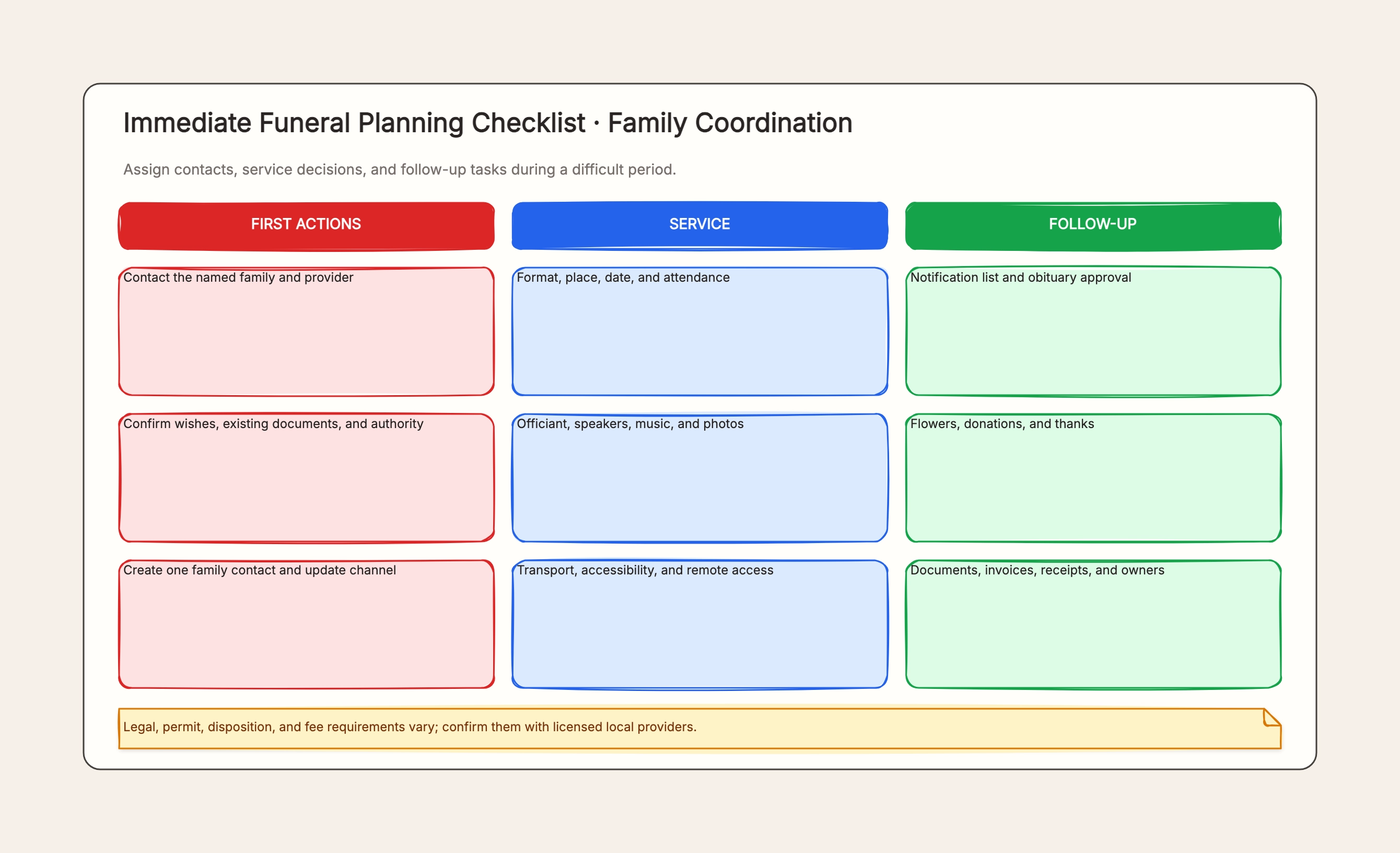
Who uses it: Close family
Why this works: Reduces repeated communication and names owners.
Who uses it: Individual and family
Why this works: Records reviewable information before urgency.
Who uses it: Service coordinator
Why this works: Supports the event with a calm operational view.
Who uses it: Small household
Why this works: Keeps an intimate arrangement manageable.
Who uses it: Distributed family
Why this works: Finds access barriers in advance.
Who uses it: Family coordinator
Why this works: Moves non-urgent work beyond the service day.
The immediate list handles current tasks; a pre-need plan records preferences and document locations in advance.
The checklist coordinates work but does not create authority, a will, or a contract.
The family copy may be detailed; the public service page should omit private contact and financial information.
Name one primary contact and record the latest status.
Keep accounts, full identifiers, and private contacts in controlled records.
Licensed local providers must confirm permit, timing, service, and fee requirements.
Include contacts, wishes, service, participants, notifications, documents, costs, owners, and follow-up.
Yes, but it is not a will or legal authorization.
No. Confirm services and costs with local providers.
Go back to the template, swap in your own content, and keep the same structure if it fits your project.
Use this template: /editor/new?template=funeral-planning-checklist
Create a funeral planning checklist