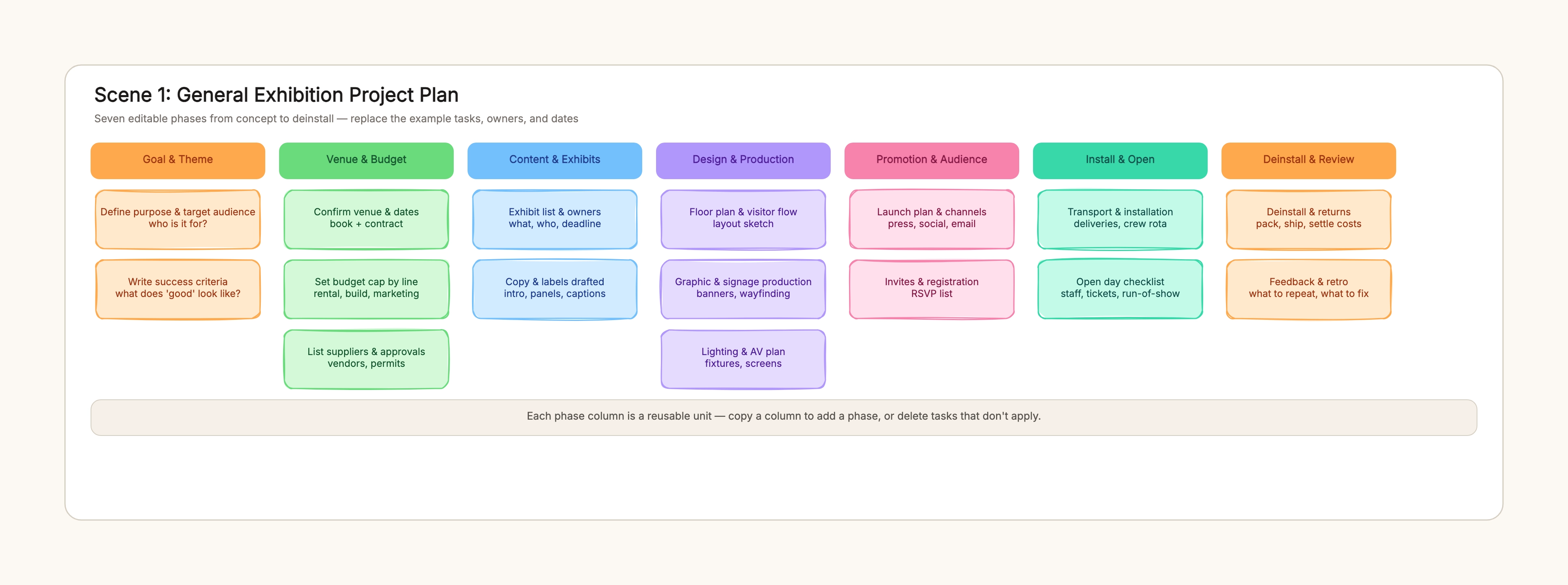
Museum special exhibition
Who uses it: A curatorial team planning a themed show around a research question
Research & Narrative — thesis, object list
→ Loans & Rights — requests, reproductions
→ Conservation & Transport — condition, crates
→ Labels & Accessibility — didactics, audio guide
→ Install & Open — floor plan, lighting test, safety
→ Education & Return — programs, deinstall, return
Why this works: The curatorial layer drives the schedule: loans have long lead times and condition reports gate the transport plan. Keeping research first means every later phase is checked against the story the show is telling.
Gallery group show
Who uses it: A gallery director organizing a group exhibition of local artists
Call & Selection — invitations, theme
→ Space & Layout — wall measure, plan
→ Transport & Install — works, framing, hanging
→ Promotion & Opening — materials, event
→ Deinstall & Feedback — returns, survey
Why this works: A group show depends on artist coordination, so selection and install responsibilities are explicit. The wall plan is drawn against the actual works list before framing starts.
Community history exhibition
Who uses it: A local history group producing a neighborhood archive show
Theme & Objects — story, borrowed items
→ Venue & Volunteers — hall, rota
→ Content & Labels — panels, captions
→ Install & Opening — layout, event
→ Return & Archive — items back, records
Why this works: Community shows lean on volunteers and borrowed objects, so the plan names a volunteer coordinator and tracks every borrowed item through return. The archive phase keeps the material reusable.
School exhibition
Who uses it: A teacher coordinating a student art show
Call & Theme — brief, classes
→ Collection — select works, matting
→ Space & Hanging — hall, walls
→ Opening & Parents — invite, run of show
→ Return Works — collect, feedback
Why this works: A school show runs on a fixed date and classroom schedules, so collection and hanging have hard deadlines. Parent communication is a real phase, not an email at the end.
Trade event booth
Who uses it: A brand team planning an exhibition booth at an industry event
Goal & Budget — leads, cap
→ Booth & Logistics — booking, freight
→ Design & Build — graphics, structure
→ Staffing & Leads — rota, capture
→ Teardown & Report — freight, metrics
Why this works: A trade booth is logistics-led: freight and build dates gate everything, and the plan ends with a metrics report on leads captured, not just a teardown.
Brand exhibition
Who uses it: A marketing team creating an immersive brand experience
Concept & Audience — narrative, persona
→ Venue & Budget — space, cost plan
→ Experience & Build — installation, AV
→ Launch & Visitors — press, ticketing
→ Deinstall & Learn — teardown, retro
Why this works: Brand experiences prioritize the visitor journey, so the experience and build phase owns the AV and installation details, and the launch phase carries ticketing and press together.