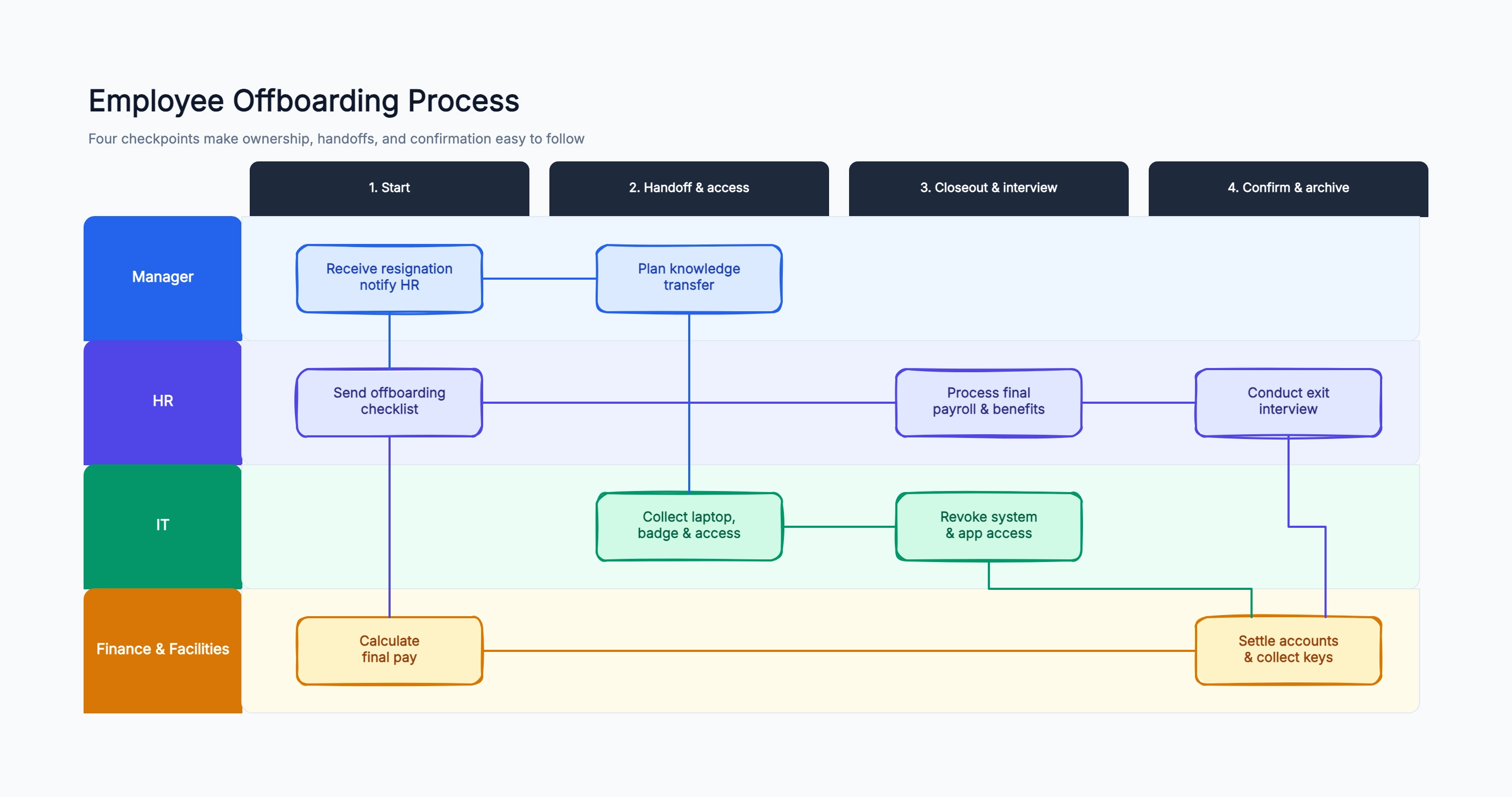
Startup offboarding
Who uses it: A small team without a dedicated HR department
Manager and HR merged into one lane
IT handles device return and account revocation together
Finance settles final pay and collects keys in one step
Exit interview folded into the manager's final check-in
Why this works: Startups collapse the four lanes into fewer owners, but they still separate IT and Finance so access and pay are not forgotten.
Tech company offboarding
Who uses it: A scaling team with strict security and compliance
Four full lanes: Manager, HR, IT, Finance & Facilities
Account revocation broken out as a dedicated IT phase
Knowledge handoff has its own phase before access is removed
Final confirmation gates the employee's last pay and offboarding closure
Why this works: Security-conscious companies emphasize the IT lane and run knowledge handoff before revoking access, so the work outlives the employee.
Contractor offboarding
Who uses it: A team offboarding a short-term contractor
Comp and benefits phase trimmed to final invoice
Device return and account revocation are the primary steps
No exit interview — a short handoff note replaces it
Final confirmation settles the invoice and closes access
Why this works: Contractors skip benefits, so the flow shrinks to access, devices, and final pay — a shorter checklist than a full-time employee's.