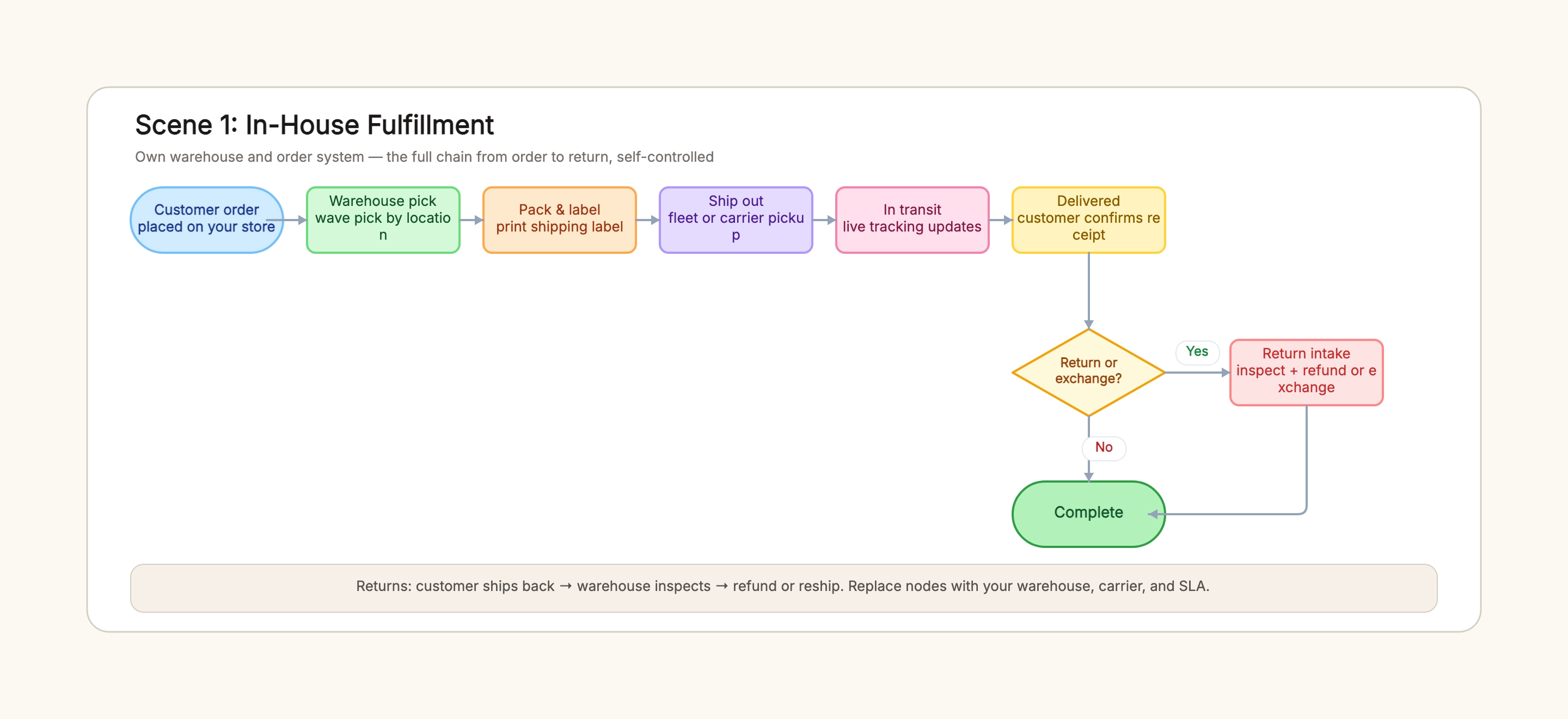
Small store, in-house fulfillment
Who uses it: A founder running their own small warehouse
Order → pick by location → pack & label
Ship out (own courier pickup) → in transit → signed
Return? → Yes: return intake → refund or reship
Why this works: A single warehouse runs every step in-house. The flow keeps the physical steps explicit so one person can own the whole chain.
Growing brand moving to a 3PL
Who uses it: An operations lead switching from self-shipping to a 3PL
Order → pushed to 3PL system → 3PL wave pick
Pack & label → carrier pickup → multi-warehouse routing
Signed → return? → Yes: return to 3PL → refund
Why this works: The flow gains a system-push step and outsourced storage. Status sync is the key handoff this diagram makes visible.
Cross-border seller
Who uses it: A merchant shipping overseas from a domestic warehouse
Overseas order → cross-border payment → domestic pick
Sort + customs docs → pack & label → first-mile ship
Clearance + last mile → overseas sign-off
Return? → Yes: return or overseas warehouse
Why this works: Customs and clearance sit between the first and last mile. The diagram keeps those steps separate so they are not forgotten.
Subscription box with monthly waves
Who uses it: A subscription brand batching orders into picking waves
Batch orders → wave pick → pack same SKU sets
Label & manifest → carrier pickup → delivered
Return? → Yes: inspect → refund or reship next cycle
Why this works: Subscription fulfillment batches orders into waves. The pick step becomes a wave pick, and returns feed the next cycle.
Marketplace with seller-managed shipping
Who uses it: A marketplace operator documenting the seller handoff
Customer order → routed to seller → seller pick & pack
Seller ships → tracking uploaded → delivered
Return? → Yes: return to seller → refund via marketplace
Why this works: The marketplace does not own the warehouse, so the flow centers on the handoff to the seller and the tracking upload back.
Same-day delivery flow
Who uses it: An urban retailer offering same-day delivery
Order → priority pick → pack in store
Courier dispatch → same-day delivery → signed
Return? → Yes: courier return → store refund
Why this works: Same-day compresses the middle steps into hours. The diagram calls out the courier dispatch and store return instead of a warehouse.