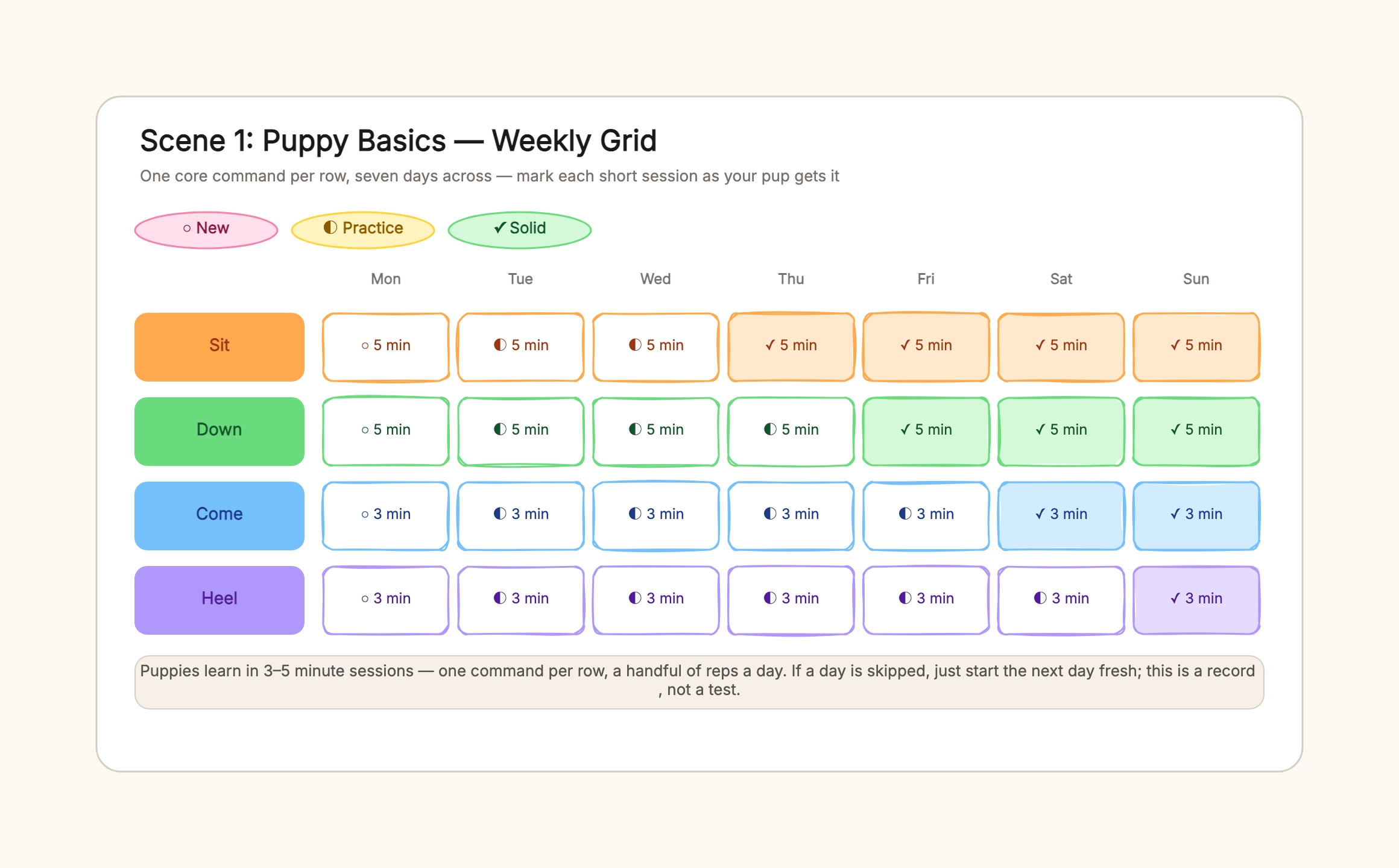
First-week puppy
Who uses it: A new owner bringing home an 8-week-old puppy
Sit — 5 min, mark new → practice → solid
Down — 5 min, lured from sit
Come — 3 min recall with a treat
Heel — 3 min loose-leash steps indoors
Why this works: A puppy learns in short bursts, so each command gets its own row with a 3–5 minute session and a done mark as it sticks.
Rescue dog settling in
Who uses it: An adopter teaching a rescue the house rules
Sit and down — rebuild the basics indoors
Come — high-value recall first
Stay — 10–15 min at mealtimes
Settle — calm on a mat while you cook
Why this works: A rescue may know some cues but not the house rules. The schedule rebuilds basics indoors before adding outdoor proofing.
Adult dog leash manners
Who uses it: A busy professional with an adult dog that pulls
Behavior: pulling on leash
Teach instead: heel by your side
Daily practice: 2× 5 min walks
Progress: week 1 → week 3
Why this works: Leash pulling is a problem behavior, so it goes in the correction scene — a replacement cue plus a daily practice amount.
Family dog with guests
Who uses it: A family whose dog jumps on visitors
Behavior: jumping up
Teach instead: sit to greet
Daily practice: 3× at the door
Progress: week 2
Why this works: Jumping is fixed by teaching sit-to-greet, practiced at the door a few times a day, so the dog has something to do instead.
Obedience proofing before a trip
Who uses it: An owner preparing a dog for a busy holiday park
Sit — indoors ✓ → outdoors ✓ → distraction ◐
Down — indoors ✓ → outdoors ◐
Stay — 15 min with distance and noise
Come — recall around other dogs
Why this works: A command only counts once it holds around triggers. The schedule proofs each command through indoor, outdoor, and distraction stages.
Shelter volunteer basics
Who uses it: A volunteer training multiple dogs in short sessions
Sit and down — one command per dog per session
Come — recall with name first
Loose-leash — a few steps, then a break
Progress — a mark per dog per visit
Why this works: Volunteers rotate dogs, so the schedule keeps one command per short session and a progress mark per dog so nothing is forgotten between visits.