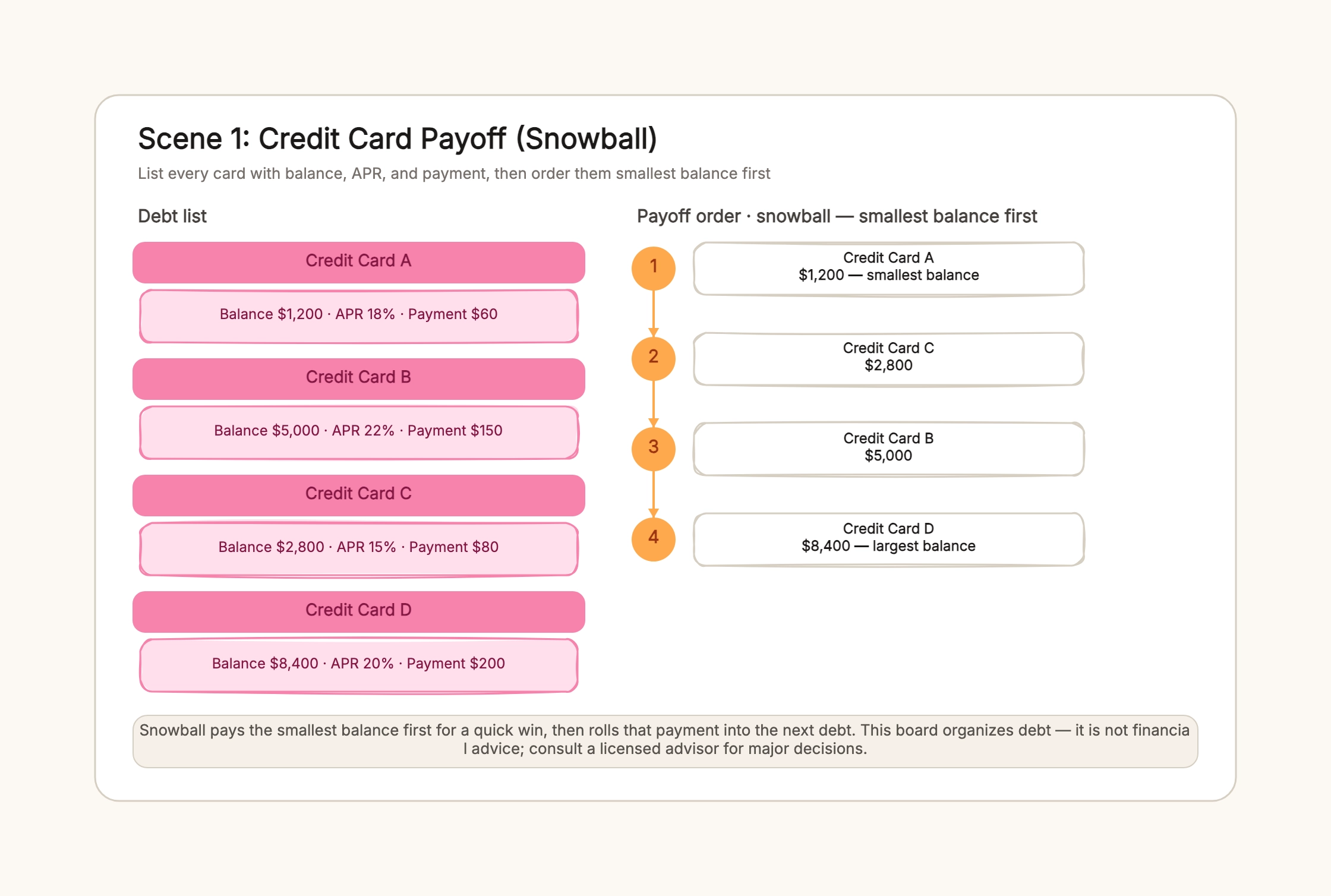
Four credit cards, snowball order
Who uses it: Someone with several credit card balances
Card A — $1,200 · 18% · $60
Card C — $2,800 · 15% · $80
Card B — $5,000 · 22% · $150
Card D — $8,400 · 20% · $200
Order: A → C → B → D
Why this works: Snowball sorts by balance, so the smallest card is paid first for a quick win. The freed payment then rolls into the next card.
Student loan plus credit card, avalanche order
Who uses it: A graduate paying student loans and card debt together
Credit card — $5,000 · 22% · $150
Personal loan — $9,000 · 12% · $220
Auto loan — $12,000 · 7% · $280
Student loan — $15,000 · 5% · $190
Order: card → personal → auto → student
Why this works: Avalanche sorts by APR, so the 22% card is paid first to stop the most expensive interest, then the list works down to the low-rate loans.
Snowball vs. avalanche for the same debts
Who uses it: Someone deciding which method to commit to
Snowball: A ($1,200) → C ($2,800) → B ($5,000) → D ($8,400)
Avalanche: B (22%) → D (20%) → A (18%) → C (15%)
Same four debts, two different orders
Why this works: Putting both orders side by side makes the trade-off visible: snowball closes the smallest first, avalanche hits the highest rate first.
Freelancer with uneven income
Who uses it: A freelancer or contractor with variable monthly income
List every balance and its minimum payment
Mark the smallest debt as the first target
Set a base payment for lean months, a bigger one for good months
Why this works: Uneven income makes snowball attractive, because closing a small debt frees a full minimum payment that no longer depends on a good month.
Medical bills and a card
Who uses it: Someone juggling a medical bill and credit card debt
Medical bill — $1,800 · 0% · $90
Credit card — $4,200 · 21% · $120
Order depends on the method, not on which debt feels scarier
Why this works: A 0% medical bill and a 21% card split the two methods: snowball would pay the smaller bill first, avalanche would attack the card.
Couple combining two sets of debts
Who uses it: A couple merging their finances and paying down together
One list for all debts, regardless of whose name is on them
One shared order, one shared monthly total
A monthly review to update balances
Why this works: Combining debts into one list and one order removes the 'whose debt is it' question and turns repayment into a shared project.