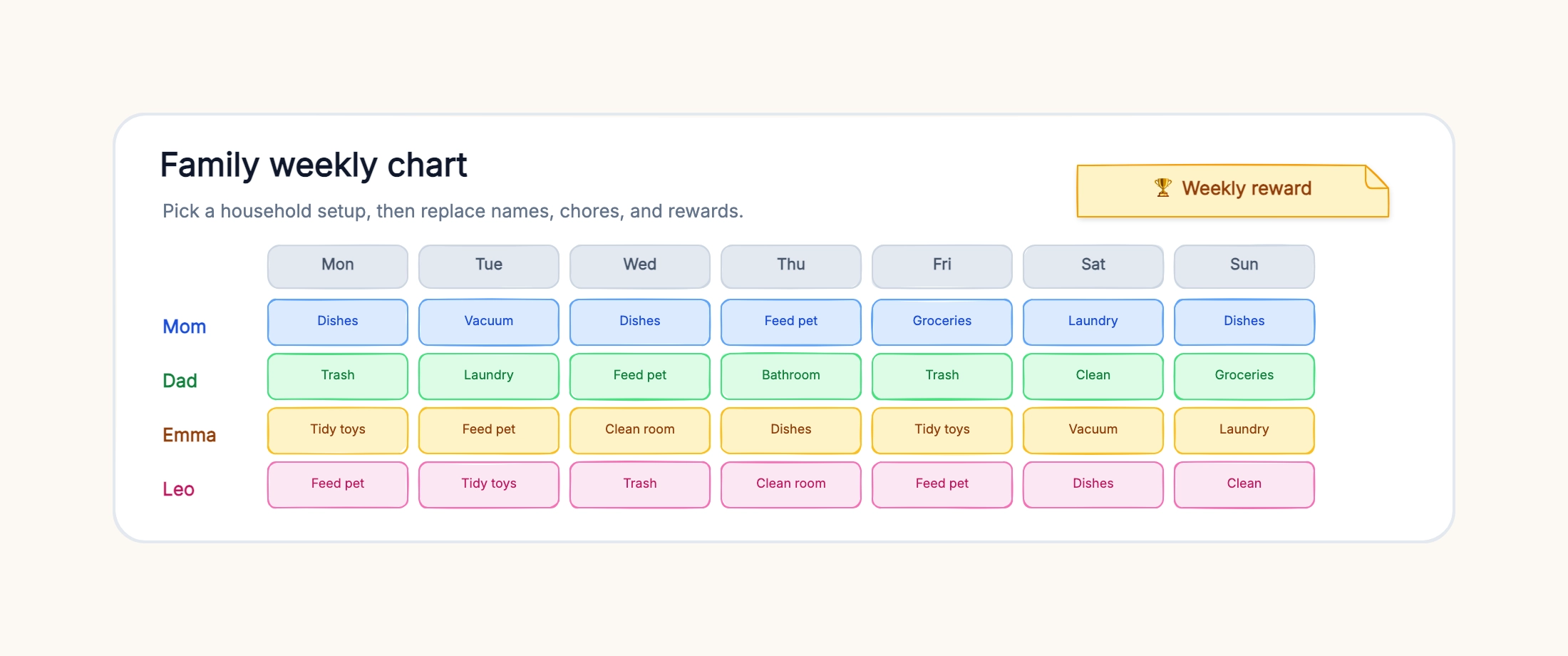
Family weekly chart
Who uses it: A household assigning chores to each member
Mon — Parent A: dishes | Kid 1: feed pet
Tue — Parent B: laundry | Kid 2: tidy toys
Wed — Parent A: vacuum | Kid 1: set table
Thu — Parent B: bathrooms | Kid 2: trash
Fri — Shared: kitchen | Kids: make beds
Why this works: Assigning a chore per person per day keeps the chart readable and the work spread. Shared chores get a named owner too, so nothing is assumed.
Kids chore chart
Who uses it: A family tracking age-appropriate chores
Kid 1 (age 6): make bed, feed pet, tidy toys
Kid 2 (age 9): set table, take out trash, homework tidy
Done column per day, checked by the child
Why this works: Matching tasks to ages keeps the chart realistic. A done column the child checks themselves builds the habit without a reward system being required.
Roommate rotation
Who uses it: Roommates splitting shared chores fairly
Week 1 — A: kitchen, B: bathroom, C: trash
Week 2 — A: bathroom, B: trash, C: kitchen
Week 3 — rotate again
Why this works: A rotation cycles the unpleasant chores so nobody is stuck with them. Showing the cycle on the chart makes the fairness visible.
Weekly rotation for shared chores
Who uses it: A household alternating the common areas
Kitchen — weekly rotation
Bathrooms — weekly rotation
Trash & recycling — alternate days
Common areas — biweekly rotation
Why this works: Shared chores on a visible rotation keep the work fair across the week. Different chores can rotate at different frequencies.
Chore chart with a reward tracker
Who uses it: A family choosing to add incentives
Chores tracked on the chart with a done column
Points per completed chore (family's own choice)
Reward decided by the family, not the template
Why this works: The chart tracks the work; any reward is the family's separate decision. Keeping them separate means the chart works even if the reward changes.
Single-parent household
Who uses it: One parent coordinating shared chores with kids
Parent: cooking, laundry, bathrooms
Kids: beds, table, pet, toys
Weekly family task together on Sunday
Why this works: A single-parent chart assigns what each person can realistically carry, and one shared weekly task keeps everyone invested in the household rhythm.