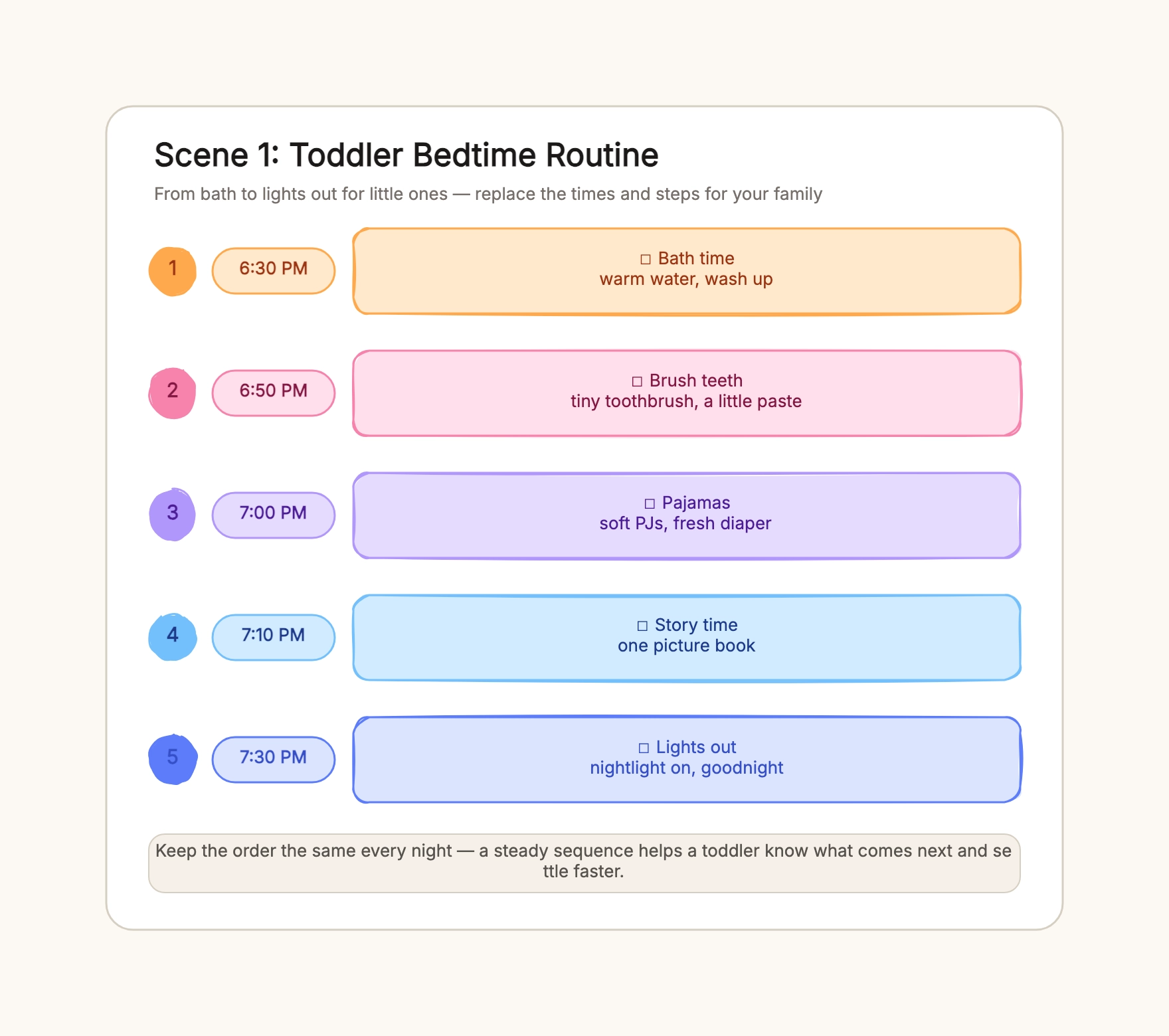
Toddler bedtime routine
Who uses it: A parent winding down a toddler for the night
6:30 PM — bath time, warm water
6:50 PM — brush teeth, tiny toothbrush
7:00 PM — pajamas, fresh diaper
7:10 PM — story time, one book
7:30 PM — lights out, nightlight on
Why this works: Five short, parent-led steps with an early lights out. The steady order is what helps a toddler know what comes next and settle.
School-age bedtime routine
Who uses it: A parent helping a school-age kid wind down independently
7:15 PM — shower, wash up
7:35 PM — brush & floss
7:45 PM — pajamas, pick clothes
7:55 PM — reading, 20 minutes
8:15 PM — lights out
Why this works: The child runs most steps alone, so the chart becomes the reminder. Each step has a time so the whole wind-down fits the window.
Teen bedtime routine
Who uses it: A parent setting a screen-free wind-down for a teenager
9:00 PM — shower
9:25 PM — brush & floss
9:35 PM — change into sleep clothes
9:45 PM — wind down, no screens
10:00 PM — lights out, phone outside
Why this works: Short and about winding down — the phone charges outside the bedroom and the last step is a hard stop, not a debate.
Two-child staggered bedtime
Who uses it: A parent juggling two kids with different bedtimes
7:00 PM — toddler bath and teeth
7:30 PM — toddler lights out
7:45 PM — older kid shower and teeth
8:15 PM — older kid reading
8:30 PM — older kid lights out
Why this works: Two routines share one evening by staggering start times. The chart keeps both sequences visible so the earlier child's steps don't get skipped.
Weekend bedtime routine
Who uses it: A family keeping a near-constant routine even off school
7:45 PM — bath or shower
8:05 PM — brush teeth
8:15 PM — pajamas
8:25 PM — family read-aloud
8:45 PM — lights out
Why this works: A slightly later version of the weekday routine keeps the same order so Monday isn't a reset. The times shift, the sequence stays.
Reluctant-sleeper routine
Who uses it: A parent of a child who resists the last step
7:00 PM — warm bath
7:20 PM — brush teeth
7:30 PM — pajamas
7:40 PM — one book, two choices
8:00 PM — lights out, check the chart
Why this works: For a child who stalls at lights out, the chart hands the last word to the routine: the child checks the final card instead of arguing with you.