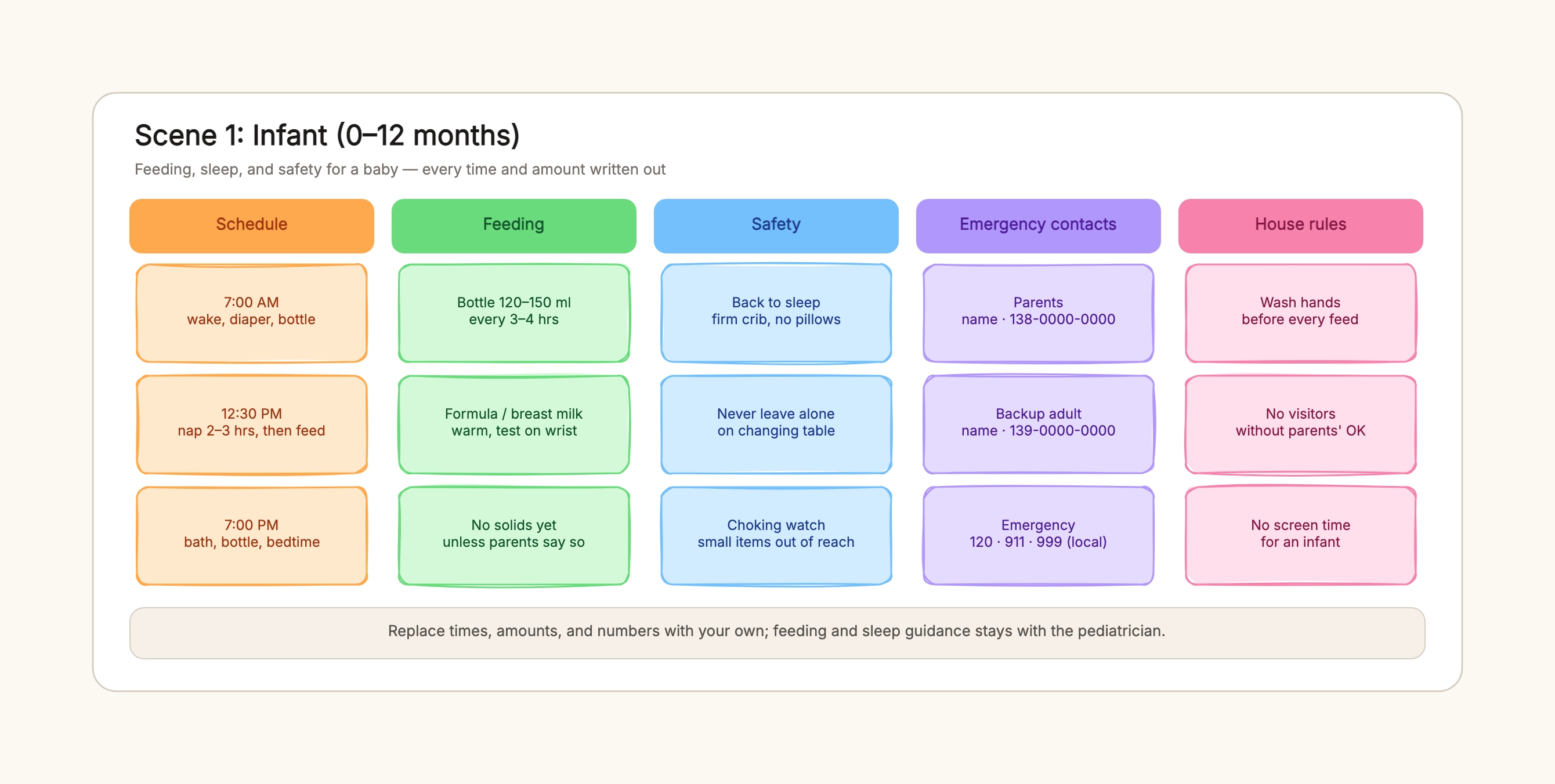
First-time parents with an infant
Who uses it: New parents leaving a baby with a sitter for the first time
Schedule — 7:00 wake · 12:30 nap · 7:00 bedtime
Feeding — bottle 120–150 ml every 3–4 hours
Safety — back to sleep, no pillows
Contacts — parents, backup adult, 120 / 911
House rules — wash hands, no visitors
Why this works: First-time parents need every detail written down. Amounts and nap times are explicit, and the back-to-sleep rule is spelled out so the sitter does not guess.
Working parents of a toddler
Who uses it: Two working parents with a child in daycare and a sitter in the evening
Schedule — 7:30 wake · 1:00 nap · 7:30 bedtime
Feeding — 3 meals + 2 snacks, cut food small
Safety — gates on stairs, eyes-on near water
Contacts — parents, backup adult, poison control
House rules — no TV before nap, tidy toys
Why this works: A toddler on the move needs supervision first. The instructions pair meals and snacks with childproofing and a no-TV-before-nap rule so the evening winds down predictably.
School-age after-school care
Who uses it: Parents whose school-age child has a sitter from pickup to dinner
Schedule — 4:00 snack + homework · 6:00 dinner · 8:30 lights out
Feeding — fruit and yogurt snack, serve dinner without forcing
Safety — know the pick-up plan and who may collect
Contacts — parents, school office, 120 / 911
House rules — homework before screens, no friends over
Why this works: For a school-age child the page shifts from feeding to routine and rules. Homework-before-screens and the pick-up plan replace bottle amounts as the parts a sitter must not improvise.
Date-night sitter for a baby
Who uses it: Parents heading out for an evening and leaving a baby asleep
Evening — 7:00 bottle, then bedtime
Feeding — one bottle warmed, test on wrist
Safety — baby monitor on, check before leaving
Contacts — parents' cell, neighbor, 120 / 911
House rules — no visitors, keep doors locked
Why this works: A short evening needs a lighter page — one bottle, one bedtime, and the monitor on. The neighbor is the backup because the parents are the ones out.
Grandparent stepping in
Who uses it: Grandparents covering a weekend so the parents can travel
Weekend schedule — meals, nap, and bedtime as usual
Feeding — portions and the no-nuts rule written down
Safety — where the childproof locks and first-aid kit are
Contacts — parents abroad, pediatrician, 120 / 911
House rules — the normal screen and visitor limits
Why this works: Even familiar grandparents benefit from the current routine in writing. The page pins down what changed since last time — portions, the no-nuts rule, and where the first-aid kit lives.
Sitter for siblings of different ages
Who uses it: Parents with a baby and a school-age child under one sitter
Baby — bottle every 3–4 hours, back to sleep
School-age — 4:00 snack, homework before screens
Shared — dinner together, one bedtime routine
Contacts — parents, backup adult, 120 / 911
House rules — wash hands, no visitors without permission
Why this works: Two ages on one page means two feeding plans and one shared evening. Keeping the baby's and the older child's rules separate stops the sitter from applying one routine to both.