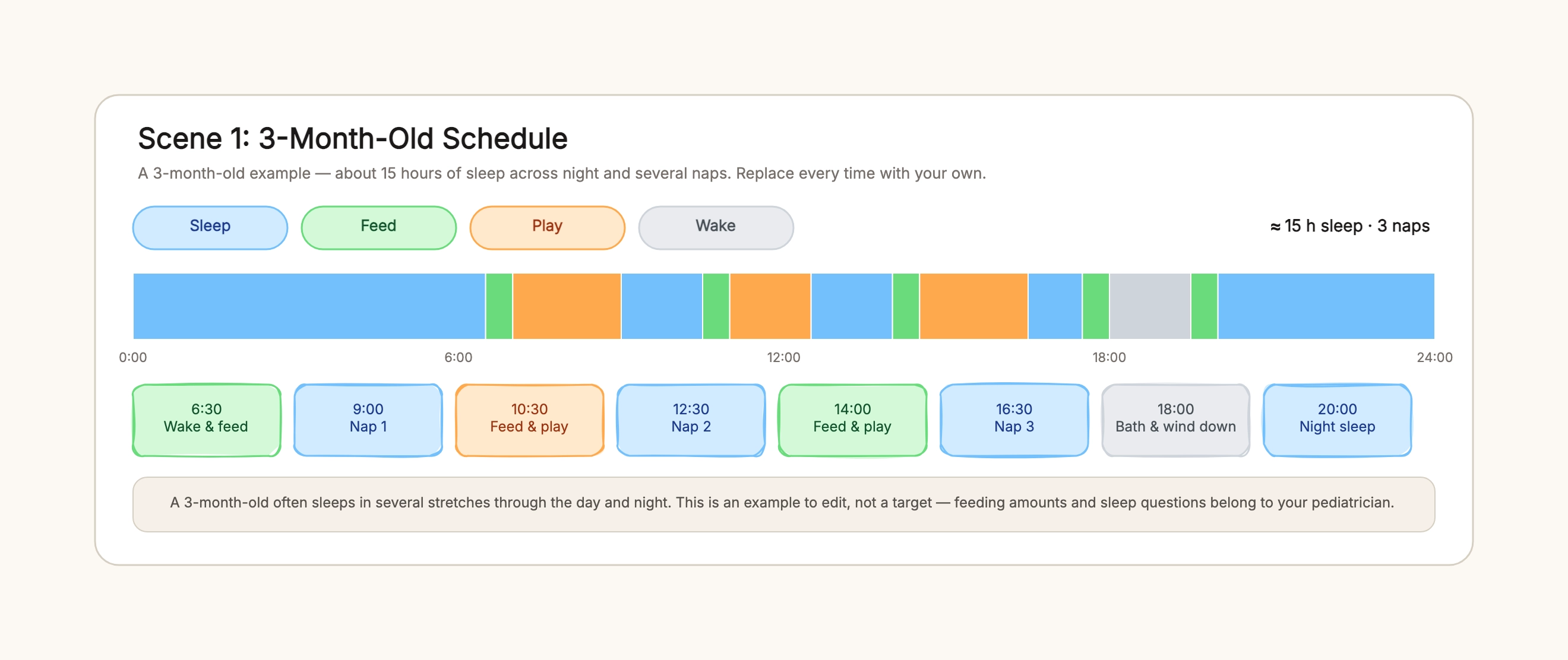
First 3-month-old rhythm
Who uses it: A first-time parent finding the shape of an irregular day
0:00–6:30 — night sleep
6:30 — wake and feed
9:00, 12:30, 16:30 — three naps
18:00 — bath and wind down
20:00 — night sleep begins
Why this works: Around three months, the day usually still has several naps plus a long night. This layout keeps night sleep on the same 24-hour line so total sleep is easy to see.
Student parent's two-nap window
Who uses it: A student parent fitting classes around two reliable naps
7:00 — wake and feed
9:30–11:00 — nap 1 (first study block)
13:30–15:00 — nap 2 (second study block)
18:00 — bath and wind down
20:00 — night sleep
Why this works: A 6-month-old's two longer naps create two dependable quiet windows. Marking them as blocks makes it easy to plan classes or study around them.
Working parent's handoff
Who uses it: A working parent planning the daycare drop-off and evening wind-down
6:30 — wake, feed, out the door
Daycare — naps and feeds logged separately
18:00 — bath and wind down
19:30 — last feed
20:00 — night sleep
Why this works: When a baby is in daycare, the home schedule mostly covers the edges of the day. This layout keeps the evening wind-down and bedtime visible so the handoff is calm.
Product manager's shift plan
Who uses it: A product manager parent running the day like a two-person shift
20:00 — night sleep (partner on until 1:00)
1:00 — night feed (I take over)
6:30 — wake and feed
9:00 — nap 1
12:30 — nap 2
Why this works: Treating overnight as two hand-off shifts helps partners split night feeds fairly. The 24-hour timeline makes the ownership of each block obvious at a glance.
Creator's protected nap window
Who uses it: A creator parent protecting one nap for focused work
9:30–11:00 — nap 1 (deep-work block)
13:30–15:00 — nap 2 (light-work block)
15:00 — feed and play
18:00 — bath and wind down
20:00 — night sleep
Why this works: For a parent making things, naps are the workday. Naming each nap as a work block turns the schedule into a plan for using the quiet time deliberately.
Grandparent's at-a-glance card
Who uses it: A grandparent stepping in and needing the rhythm at a glance
6:30 — wake and feed
9:00, 12:30 — naps
14:00 — feed and play
18:00 — bath
20:00 — night sleep
Why this works: A sitter or grandparent does not need every detail — just the anchors. This card keeps the key times big and the color legend doing the rest of the explaining.