Back to template

Baby Shower Planning Examples

These baby shower planning examples show how a host can adapt the same structure to different event sizes and responsibilities. Use the closest example as a starting point, then replace dates, guest details, owners, and activities with choices that fit your celebration.

Baby Shower Planning Examples

Real examples

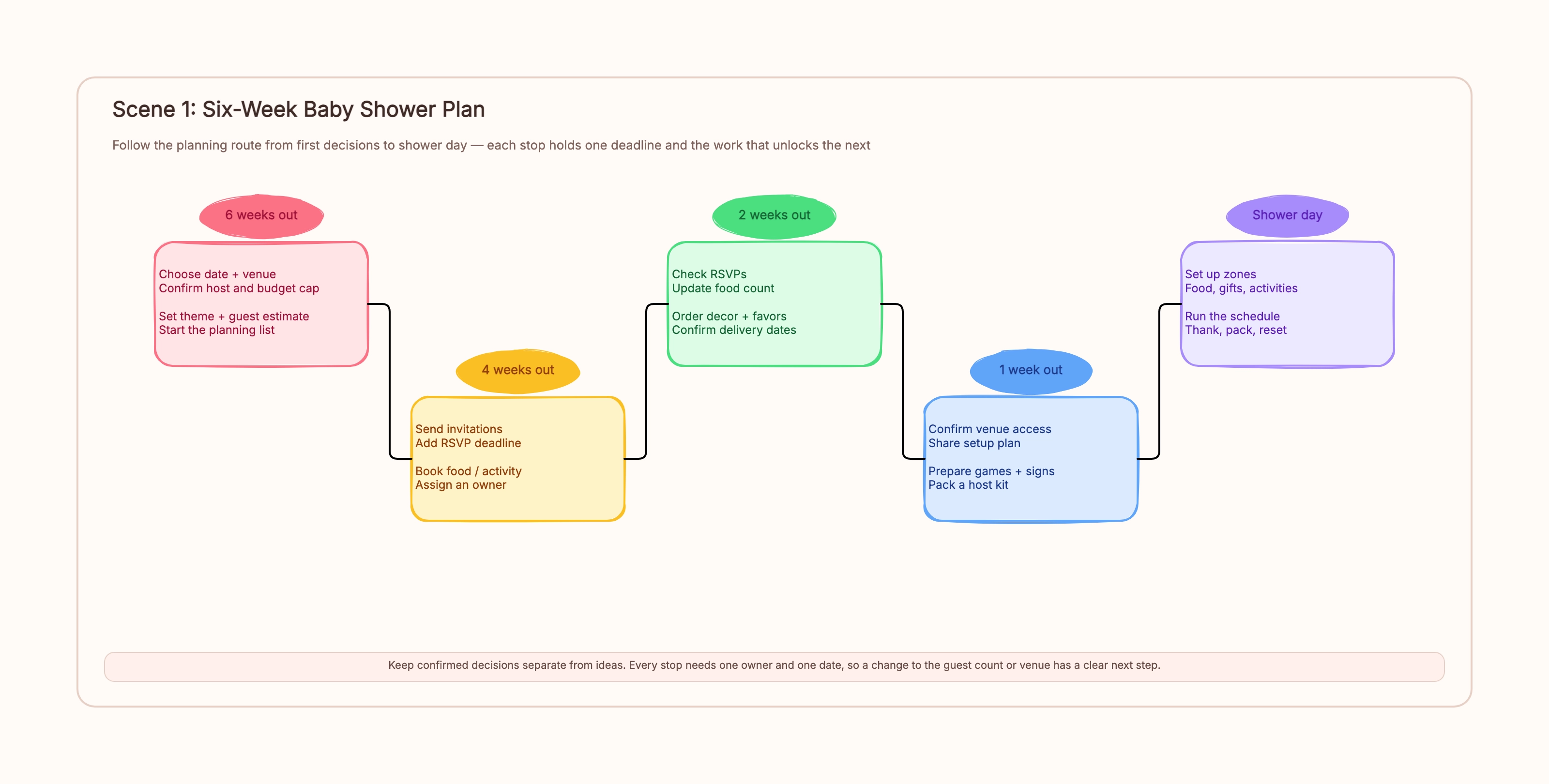
Six-week shower timeline

Who uses it: A host team planning an event with enough lead time

Week 6 — date, venue, budget, guest estimate
Week 4 — invitations, food, activity owners
Week 2 — RSVP check, decor and favors
Week 1 — access, signs, games, host kit
Day of — setup, welcome, celebrate, reset

Why this works: Working backward makes dependencies visible: the RSVP count updates food, the venue access updates setup, and the hosts can see what remains.

Small home gathering

Who uses it: A host planning a relaxed event at home

Guest estimate — 12
Food — brunch board + drinks
Activity — advice cards on welcome table
Gift area — labeled basket near entry
Cleanup — two helpers after guests leave

Why this works: A small gathering needs fewer tasks, but still benefits from clear zones and owners so the host can spend time with guests.

Co-hosted event

Who uses it: Friends or family members splitting the work

Host A — invitations + RSVPs
Host B — food order + pickup
Host C — decor + activity table
Day-of lead — welcome + timing
All hosts — pack and reset

Why this works: This example gives one owner to each workstream while keeping the entire event visible to everyone who is helping.

Guest and budget board

Who uses it: A planner whose numbers are changing as RSVPs arrive

Guest: Maya + Jordan — yes, 2
Guest: Priya — waiting, send reminder
Food cap — $140, order Friday
Decor cap — $80, pickup Tuesday
Favors — count after RSVP deadline

Why this works: Keeping response status beside budget and orders turns a changing headcount into an explicit update instead of a surprise.

Open-house style shower

Who uses it: A celebration where guests arrive across a wider time window

Welcome station stays open
Food replenished in two waves
Advice cards available all event
Photo spot available without a schedule
Hosts rotate greeting and reset

Why this works: An open house does not need formal activities every hour. The board focuses on stations, replenishment, and host rotation.

Day-of handoff

Who uses it: A host team that wants the event to run without constant questions

10:00 — food + signs, Lee
10:30 — activity table, Sam
11:00 — welcome + drinks, Maya
11:40 — food + activity, Jordan
1:15 — pack + cleanup, all

Why this works: The run of show names the few moments where someone needs to act. Everything between those handoffs can remain social and flexible.

Tips for practical baby shower planning examples

  • Work backward from the event date and venue access time.
  • Keep RSVP status, final count, budget, and orders connected.
  • Assign one owner to every purchase, setup task, and key time block.
  • Use the run of show for handoffs, not for controlling every minute of a celebration.

Related resources

How it compares to similar tools

Home gathering vs. venue event

A home gathering often needs fewer logistics but more setup zones and cleanup ownership. A venue event adds access time, vendor coordination, and clearer arrival or departure handoffs.

One host vs. co-hosted plan

A solo host can organize by task sequence. Co-hosts need ownership next to every task so no one assumes another person has covered it.

Common mistakes to avoid

  • Ordering from an estimate after RSVPs change

    Use the estimate for early planning, then update food, favors, and seating from the latest confirmed count.

  • Forgetting venue access and reset time

    Setup and cleanup need their own blocks. Check access and departure requirements before promising a run of show.

  • Leaving hosts without a shared current plan

    A plan inside one person’s messages is hard to run. Keep the event board where all hosts can see owners, changes, and next steps.

Frequently asked questions

How far ahead should a baby shower be planned?+

Use the six-week example as a flexible planning frame, then adjust it for the venue, guest list, host availability, and event format. Start with the decisions other tasks depend on.

What are the main baby shower planning tasks?+

The main tasks are confirming date and venue, setting a budget and guest estimate, sending invitations, tracking RSVPs, arranging food and supplies, preparing activities or zones, and assigning day-of handoffs.

How do co-hosts divide baby shower tasks?+

Give every workstream one clear owner — invitations, food, decor, activity table, welcome, and cleanup — then use the shared board to show due dates and dependencies.

What should be on the day-of schedule?+

Include setup, welcome, food or conversation, activities, gifts if planned, thanks, packing, and cleanup. Keep timing loose enough for guests to arrive and socialize naturally.

Can this template be used for another celebration?+

Yes. Replace the guest list, tasks, activity cards, and event-day blocks to adapt the structure to another family gathering or milestone event.

Start editing online

Go back to the template, swap in your own content, and keep the same structure if it fits your project.

Use this template: /editor/new?template=baby-shower-planning

Use this baby shower planning template