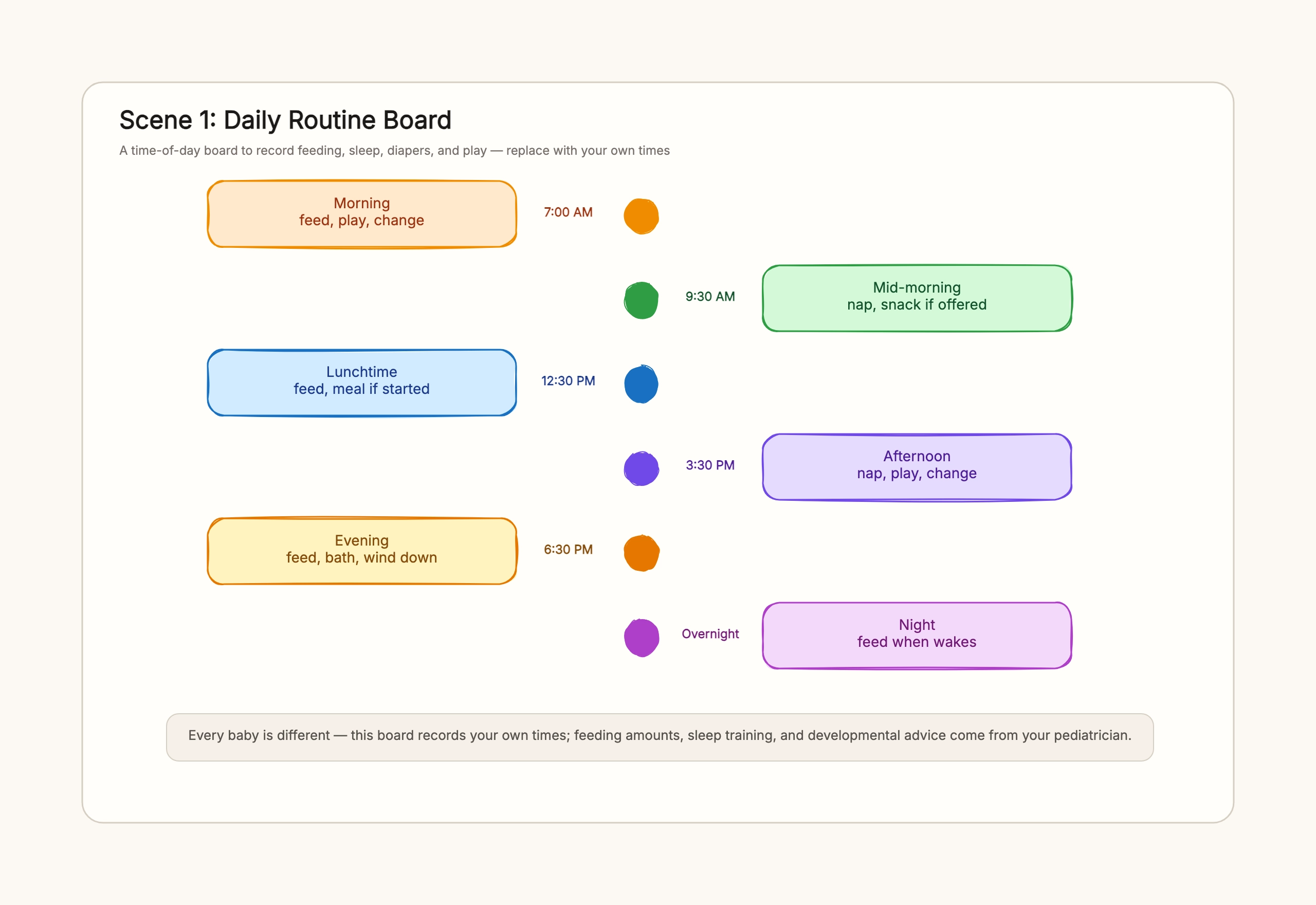
Daily routine board
Who uses it: A family recording a typical day
Morning — feed, play, change
Mid-morning — nap
Lunchtime — feed, meal if started
Afternoon — nap, play, change
Evening — feed, bath, wind down
Night — feed when wakes
Why this works: A daily board records the real rhythm in time blocks, so the pattern is visible without being treated as a target.
Week of naps and feeds
Who uses it: A family watching the rhythm across days
Record each day: sleep blocks, feeding times, notes
Spot the pattern — longer naps, shifted feeds
Adjust the board as the week changes
Why this works: A weekly view widens the lens, showing the rhythm that is emerging across days rather than one snapshot.
Blank daily grid
Who uses it: A family building the record from scratch
Time | Activity | Notes columns
Fill each block for your own baby
Copy a card to add a block
Why this works: A blank grid starts from your own day, with time, activity, and notes columns that grow with the baby.
Newborn first weeks
Who uses it: A family in the early weeks
Feed on wake — day and night
Short naps through the day
Diaper changes at each feed
Notes for the pediatrician
Why this works: In the early weeks the board is mostly feed-and-sleep records, with a notes column for anything to mention to the pediatrician.
Shared with a sitter
Who uses it: A family handing care to a sitter
Same board for parents and sitter
Feeding and nap blocks filled in
Notes on what to watch for
Why this works: A shared board keeps the family's pattern consistent when the caregiver changes, with notes that travel with the record.
Growth-spurt week
Who uses it: A family during a changing phase
More frequent feeds recorded
Naps shorter or longer than usual
Board adjusted mid-week
Why this works: A growth-spurt week shows why the board is a record, not a routine — it changes with the baby and gets adjusted freely.